Alby Stone: The Moment of Existence

Copyright © 2025 Alby Stone

Something smells interesting, but I really can’t be bothered to get up to investigate. The space beside me is unoccupied but still warm, so the undisputed love of my life must have risen only a short while ago. Unlike me, she prefers to wash and prepare herself for the day after breakfast. Also unlike me, she likes to get up earlier; I’m the kind of guy who needs a nap to recover from a good night’s sleep, especially after a late night. So I’ll just doze here for a while and enjoy the aromas of toasting and frying.

When I wake again the smells still linger but the house is silent. I contemplate contemplating the ceiling for a few more minutes but my belly is rumbling and there is a familiar discomfort in my nether regions. I empty my bladder, wash, then head for the kitchen. My breakfast is there, as it always is at this time of day. As usual, she’s left me a note, even though she knows I never read them. This one says: Have a great day. Might be back a bit late – drinks after work followed by a row of wholly unnecessary XXXs. Okay, I lied about never reading her notes. But please, don’t tell her. Sentimentality should not be encouraged.

She works in an office. I’m not exactly sure what she does there, but it seems to involve making sure one set of numbers tallies with another, and swearing a lot when they don’t, which happens often. Yes, I know she looks like the butter-wouldn’t-melt sort, and she’s a real sweetheart, but let me tell you – when she’s roused, when the brakes fail and her temper is unleashed: fishwife. Me? I’m the calm and relaxed type, an artist, a philosopher. My work is cerebral. I also have a few hobbies. Her friends say I’m a layabout, an idler, lacking both ambition and application; but nothing could be further from the truth. What do they know? An interest in fashion and interior design does not qualify anyone to pronounce judgement on someone else’s inner life.

With my belly filled, I take my usual seat in the conservatory and gaze out of the window. It’s been snowing, which is pretty unusual at this time of year and in this part of the world, or so she says. The white blanket covering the garden is marred by a couple of black shapes, crows searching half-heartedly for tasty titbits. They’re not my favourite creatures but I feel a bit sorry for them, out in the cold, not much to eat, struggling across the snowy expanse, leaving their meandering trails of little trident footprints to show where they’ve been. Poor things. Their plight makes me grateful for the finer products of human ingenuity: double glazing, central heating, the duvet, sofas and cushions, vans delivering groceries – now that’s what I call civilisation. It’s the closest thing to meaning in this meaningless universe. I’ll take what I can get.

I’m not technically agoraphobic, but I don’t go out much. There’s no need, not really. Besides, she doesn’t like me going out. She’s overprotective, her friends say. But that doesn’t ring true. I think she just doesn’t trust me to behave – too many temptations out there, and always the possibility of danger. I could be wrong about that, but it would explain why she not only tolerates but actively encourages my contemplative, creative lifestyle. Not that it matters; the end result is the same. So I sit and watch the world through one window or another, and contemplate life and dream my dreams.

In the corner of the room is a green plastic tree adorned with tinsel, little twinkling lights and small shiny spheres that reflect a curved version of my face if I get close. Tinsel, in fact, is everywhere. She loves the stuff. She also loves making chains from coloured paper – cut to size, link, bend, glue with PVA, stand on a chair and pin to the ceiling, the whole process. I once tried to help but was scolded. I’m too clumsy and messy, she said, and I’ve kept well clear ever since. She’s taken to wearing a red cap with white trimmings and bobble, same as every year. The time of year means nothing to me, though I do enjoy a good Christmas dinner, even if I avoid sprouts and cranberry sauce like the plague. Not too keen on roast potatoes either. I did try Christmas pudding once when I was young but didn’t like it much, though the custard was nice.

There’s a noise at the front door, then something drops onto the doormat. It’s a card for her, no stamp so it’s been hand-delivered by a neighbour or one of her friends. That’ll be another addition to the section of wall obscured by robins, fat men in red and white suits and beards, Baby Jesus in his mother’s arms surrounded by sheep, cows, shepherds and Wise Men and a Joseph trying his damnedest to look as anonymous in the flesh as he is textually. I’ve never seen the point of all this celebratory nonsense. It’s just fodder for landfill or the recycling bin. I mean, you can’t do much else with cards, used wrapping paper or knackered old decorations, can you? No matter how bright and cheerful and pious the cards and tinsel and baubles are, the story is the same: hung out once a year, a few days of being largely ignored, then back into the loft or the recycling bin with them, as required. They are human civilisation in microcosm, a downwardly spiraling series of flashes in the pan. One day, pretty soon if the television news is any guide, that pan will be flushed.

More snow is falling. The treetops glisten and I listen, but all I hear is disappointed cawing. The crows have given up their fruitless quest for food and have returned to their roosts to complain. They’ll be okay because she’s incredibly soft-hearted. Tomorrow she’ll set up the usual garden feast: scraps for the crows and pigeons, fat balls and topped-up bird feeders hung from branches, scattered nuts for the squirrels, a few stainless steel dishes heaped with cat food for the badgers and hedgehogs we never see. Well, you never know who’s going to be calling in on Christmas morning.

She knows quite a lot about Christmas, which means I do too, as she has a tendency to lecture, and I’m a captive audience. Last week I was watching a David Attenborough wildlife documentary and she talked all the way through it, from opening titles to end credits. It didn’t spoil the show but I now know more than I ever wanted to about seasonal festivals. For instance, that Christmas is only one religion’s take on what the winter solstice means. Far from being about the birth of a holy child in a far-off land more years than I can count – literally – it’s really a celebration of the moment the sun is reborn after a year-long decline, and an opportunity to cheer up and fatten up for the coldest part of the year. Every culture and religion in the northern hemisphere has its own version, and it’s been going on for a very long time, since long before the Baby Jesus was even a twinkle in a deity’s eye. For as long as there have been human beings, they have feasted and decorated and exchanged gifts to mark the end of those long nights and in anticipation of light and food to come. Christmas presents are actually an example of something called potlatch, gifts to demonstrate affection and cement social ties. At least, I think so. I confess that I’d tuned out by then and was preparing to embark on an after-dinner nap. I can’t help it. A full belly always makes me sleepy, and at this time of year meals tend to be larger, which is fine by me. It will help put me in the mood to continue work on my magnum opus.

With a start, I realize that it’s getting dark, with not a single word added to The Moment of Existence. I’ve somehow managed to fritter away the whole day. But that’s alright. Each day is succeeded by another and tomorrow will surely be more productive. Then I hear her key in the lock and the door opening with a quiet creak. I go to greet her. She’s slightly unsteady on her feet and smiling, clutching a bag filled with cards and a Secret Santa present that will surely migrate to a nearby charity shop early in the New Year. She hugs me and we kiss, tell each other about our days, which admittedly in my case doesn’t amount to much. She’s got a fish supper for tonight’s dinner, a convenience meal to microwave later because first she has a lot of preparation to get through. An enormous foil-wrapped and well-stuffed turkey goes into the oven on a low heat. Potatoes are peeled and halved, left in a pan of water, ready to roast when the poultry has vacated the oven. Green vegetables are prepared for the hob. Tomorrow, the kitchen will be like a factory production line, one operation smoothly following another. Then the cooked goodies – and a few villains – will be transferred to plates and serving dishes and onto the dining table. I think it’s a lot of food for only two of us. Indigestion beckons.

Bring it on.

Later, we are snuggled up on the sofa, watching something on Netflix, about some young people battling an evil entity in a strange, underground world. It doesn’t hold my attention. She is exhausted after a day at the office and working hard in the kitchen, and she starts to nod off. After half an hour she announces that she’s going to bed. Ten minutes later, I follow. Soon, we are both fast asleep.

I am wakened by a strange noise. It is dark and, although I am by no means disorientated by the sudden leap into full consciousness. I am confused. It is pitch dark; she sleeps soundly beside me, the normal night-time situation. But the house is… unquiet. I briefly consider that the television has switched itself on again. It happens: someone in a neighbouring house has a remote control that occasionally changes channels on our television midway through a programme. She’s asked around but we don’t know who is responsible, though I’m inclined to blame that spoiled, rat-faced boy who lives two doors away. He’s always out in his back garden playing with his toys and gadgets, and he specializes in noisy things with flashing lights, and likes flying drones over other people’s property. Okay, I’m biased, but that’s only because he once threw a stone at me while I was in the back garden. How can you trust someone like that?

Anyway, I quickly realise that the sound isn’t coming from the television. It is a sort of whisper, with soft rustling and scratching. Mice? No, they don’t whisper, they squeak. Then I have a thought that freezes my blood: burglars? In a flash, I am out of bed and padding stealthily onto the landing. Thankfully the bedroom door is left open, otherwise there would be a treacherous creak. All the doors in this house creak. Silently, I glide down the stairs. The whisper grows louder. I can’t see any lights but there is a cold draught. The back door is open. My heart beats faster. I don’t care about all the stuff – the microwave, television, her phone and laptop, the Christmas tree, not even the food – as it’s all replaceable, just things. I care about her, keeping her safe. Nothing else matters.

I am prepared to fight, to the death if necessary. And I am wholly in the moment, focused and ablaze with adrenaline. Raising myself to my full height, I push open the door to the living room, and prepare to confront any and all intruders.

The whispering, I immediately realize, is actually coming from the television set after all, the volume turned down low. On the screen, a man stands on a bridge, smiling desperately and shouting, snow falling around him in crisp monochrome. But someone is watching it. His head turns toward me as I enter the room, and our eyes meet.

He is plump, of indeterminate age, though somehow I know he is very, very old – ancient, in fact, in a way I cannot fathom. He is dressed all in red with trimmings as white as his beard and hair. He is frozen in the act of biting into a mince pie. I don’t mind that – can’t abide the things – but he is sitting my place on the sofa, legs stretched out and crossed at the ankles. In the floor to his right is a large sack, partly open to reveal packages of all shapes and sizes, all wrapped in brightly-coloured paper and tied with ribbon. He chews and swallows, then speaks, gesturing with the bisected pie.

‘Have you been a good boy this year?’

I am speechless. It’s the only sane reaction.

‘Of course you have,’ he says with a broad smile, eyes sparkling with amusement. Then he chuckles. In some way I do not understand, that makes me feel much better. Happy. Merry. He delves into the sack and brings out a small red-and-green package, then rises and places it at the foot of the twinkling tree among the other wrapped gifts. ‘This is for you,’ he says. ‘But you mustn’t open it until the morning.’ 

I’m still unable to utter a sound. The black and white film has ended. Now there is a news broadcast: more seasonal violence in the world’s supposedly holiest places, members of Homo sapiens doing the usual unspeakable things to one another. A tropical storm and tiny figures taking refuge on unsafe-looking rooftops; a burning mosque, a church reduced to smoking rubble; wailing parents and weeping children; hospital beds with bloodied, bandaged forms lying motionless; faces filled with anger, despair and dread; politicians with unconvincingly innocent expressions blaming everyone but themselves; a Nativity scene in a far-off land.

‘That’s what they don’t understand, the bearded man says sadly. It should be a time of peace and goodwill and prosperity for all, but it never is. It isn’t about religion – life isn’t about religion. They’d do well to remember that I was here before the fools invented the first god. The meaning of Christmas – of me – is this: full bellies, warmth, shelter and safety. I’m here for them, and they should be here for one another.’ He points at the television screen. ‘Look, my young friend. Look at that Nativity scene. What does it tell you? It tells you that Christmas, under whichever name you prefer, is for all. It’s for those who govern, the thinkers, the workers. It’s for men, women and children, of every kind – for the rich and the poor, but especially the poor. And look – the animals too. Life on this world is a precious thing, and it all matters. Christmas is a lesson for everyone. Look after the moments – especially the good moments, the safe, warm and happy ones – and the future will look after itself.’

Staring at me thoughtfully, he finishes the mince pie and takes a sip from a glass of sherry – I hadn’t even noticed that – smacking his lips appreciatively. ‘Oh well,’ he says, ‘I’d better get on. I’ve still got Ireland and the Americas to do. That’s a lot of metaphorical chimneys before this sack gets emptied. And the presents are also metaphors, you know. It really is the thought that counts. Not that the bloody idiots ever bother to think. But what do I know? I’m just the message. I do my job and that’s all I can do.’

He winks, puts on his red cap with the white edge and bobble, and hoists the sack over a meaty shoulder. Then he leaves. As he goes, I hear a muttered ‘Damn, left the bloody door open again.’ The back door closes and, weirdly, I hear it lock itself from the inside. The sherry glass and the foil tray that held the mince pie have vanished from the coffee table.

Still stunned into silence, I go back to bed. Sleep is elusive so I start planning the next chapter of my book. Eventually, I lose consciousness and dream of crows walking in the snow, marching armies of tiny men in red suits with sacks over their shoulders, and an endless stream of envelopes falling onto the doormat. Then I’m awake again to an empty bed and a still-warm spot, and the smell of toast and frying eggs. I rise, perform my ablutions, and join her at the breakfast table.

‘We can open our presents when we’ve eaten,’ she tells me. We eat to the sound of the radio and it’s tale of festive disaster and woe. I think about what the old man said, and am comforted by the fact that, in this household at least, it’s true. All the fools on earth couldn’t change that. I hope. Meanwhile, I manage to convince myself that last night’s strange encounter was merely a part of my dreamscape, the result of cod-in-batter indigestion.

The suspense is prolonged when she decides that the breakfast dishes need to be washed before we get down to unwrapping whatever’s under the tree. At the kitchen sink, she picks up a glass from the drying rack. ‘I don’t remember having another drink when I got home,’ she says. Then she shrugs and gives it a quick rinse before tackling the breakfast things. After that, she makes a telephone, season’s greetings to someone I’ve never met. The typical combination of commiseration, sympathy and felicitations – all her telephone conversations are like that, the dutiful sharing of happiness and misery dictated by sentimentality – the call seems to last several days, though really it’s only about ten minutes. At last, she rings off and we get down to business. I’m excited and deeply interested in the proceedings. You have to bear in mind that I wasn’t around this time last year, so this is all new to me.

The presents under the tree are all for her, of course. Well, she’s the one with friends and family, after all. I play my part, however, watching as she peels tape from paper, making appreciative noises as her endeavours reveal a blue scarf, red gloves, a green woolly hat, a yellow blouse, purple earrings, pink-rimmed sunglasses, and a multicoloured brooch that looks like an accident in a paint factory. My appreciation isn’t entirely insincere. I’m looking forward to seeing how that combination impacts her fashion-snob friends’ idea of taste.

Finally, she unwraps a present wrapped in red and green. And my hair stands on end, which is quite an impressive sight, though I say so myself. ‘That’s strange,’ she says. ‘This one is for you, but I don’t remember seeing it before.’ With a frown and another shrug, and a loosening of slender red ribbon, the paper is off and the contents revealed.

It’s a mouse, made of grey cloth and filled with something that smells absolutely wonderful. She laughs and throws it across the room. I give chase and pounce, rubbing my face against it and biting and kicking, and that gorgeous smell explodes along neural pathways from my nose to my brain and I am consumed by the joy of this moment in which I exist and that is all there is and all there needs to be.

Alby Stone: Altered States

Altered States

Interior – the Oval Office of the White House. POTUS has his feet on desk and is ‘reading’ the latest issue of Playboy. A grinning man enters, wearing jeans, a MAGA t-shirt and baseball cap.

PRESIDENT [looks up]: Hey, Felon. Say, you look different today. No, don’t tell me, I’ll figure it out. How’s it going?

FELON: Five by five, Mr President Dump! Dude, I just saved this once-again great nation a billion bucks!

PRESIDENT: Say, that’s great. How did you do that?

FELON: I made a guy in NASA buy his own coffee.

PRESIDENT: He was spending a billion dollars on coffee?

FELON: Well, it was actually four bucks, but what am I if not a genius? I rounded it up.

PRESIDENT: Wow, that’s great. You saved us a billion dollars! I’ll give you a billion-dollar tax break as a reward.

FELON: I also fired the asshole.

PRESIDENT: He had it coming. Have you seen the Rube today?

FELON: Nein, mein Führer. Sieg h… Whoops. Sorry dude. Don’t know what came over me there. No, I haven’t seen the Rube. But XL was on the lawn licking his lips.

PRESIDENT: Damn. I wanted an update on the Gaza situation.

FELON: I thought that was done and dusted?

PRESIDENT: Yeah, but I wanted to finalise details on the golf course and exclusive Dumpworld resort. And I’ve had some bad news about that statue. They tell me Fort Knox is empty.

FELON: Empty? You mean…?

PRESIDENT: Yeah, all the gold’s gone.

FELON: How the hell did that happen? The new security guys should have had it covered.

PRESIDENT: I thought Fort Knox was guarded by the US Army?

FELON: Dude, they were all autistic quadruple-amputee dykes. Diversity hires. And government employees. I fired them all. Saved thousands of dollars. Rounded up, that’s trillions. TRILLIONS! Because I’m a genius, higher IQ than Einstein. I said that so it must be true, because I’m a genius. Anyway, I replaced those woke crippled dwarf drag queens with Star Wars action figures I got in a yard sale. Ten bucks.

PRESIDENT: That’s great. Give yourself a trillion-dollar tax break.

FELON: I also fired your janitor. I asked what he does round here and he sent me a fifty-page list. Well, if he has time to do that, I guess he’s got way too much time on his hands, and time is money.

PRESIDENT: The asshole had it coming. But where am I gonna get the gold to build my statue?

FELON: No problem, dude. We just round up everyone with gold teeth. That’ll get you enough of the shiny stuff before you can say Arbeit macht frei.

PRESIDENT: Won’t they object?

FELON: I’ll just demand they give me a hundred bullet points of what they’ve achieved in the last week. Failure to respond will be taken as resignation. Permanent resignation. At bullet point. Get it? Bullet point! Shit, I’m just so goddamn smart!

Another man enters the Oval Office. This one is wearing a suit and a tailored beard. He is scowling and tense, as if he’s looking for someone to tear apart with his bare hands, but that’s actually his happy face.

FELON: XL, dude! Great to see you.

XL: Hi, Felon. Love the threads, buddy.

PRESIDENT: Hey, XL. What’s the news?

XL: Master, I regret to inform you that the Sucker is still allowing people to express anti-free speech speech on his social media platform.

PRESIDENT: Shit, that’s bad. Very disrespectful.

FELON: I did warn you, mein – Mr President. Didn’t I say that social media sounds too much like socialist media? Now he’s letting people speak freely about our freedom of speech.

PRESIDENT: Felon, fire the disrespectful, liberal, woke asshole.

FELON: Er – I can’t. He’s not a government employee.

XL: Wrong. He supported the president, right? He gave money to the election campaign, right? He benefits from the new tax breaks, right? Then he’s a government employee.

FELON [brightens]: Yeah, that’s right, XL. He’s either with us or against us. I’ll fire him after my coffee break.

PRESIDENT [slams fist on desk]: The asshole had it coming.

FELON: Hey, maybe he’s got some gold teeth! That reminds me, I heard this great non-woke joke. How many Jews does it take to change a lightbulb?

PRESIDENT: That’s a tricky one. Oh, I give up. Go on, tell us.

FELON [adopts bad German accent]: Ah, the Jewish Question. Let me think about it and I’ll get back to you later with a Final Solution.

XL [stares blankly at Felon then shakes his head]: Nope, I don’t get it.

PRESIDENT: Must be an intellectual joke. Let’s face it, this guy is the greatest genius of our time, probably the greatest of all time. He told me that, so it must be true. So that must be the funniest gag I ever heard.

XL: Yeah, but why’s it funny?

FELON: Because it’s about math, XL dude. How many, right? That’s math.

XL: Not Jews?

FELON: No, dude. Jews are just, like, you know, a MacGuffin.

PRESIDENT: Mmmm, I like those. A nourishing breakfast in a sandwich. Even better than a cheeseburger.

XL: So why the Colonel Klink accent, Felon?

FELON [shrugs]: Hey, that was just the way I heard it on some Groyper podcast. Uh, Mr President, are you okay there?

PRESIDENT [squirming in chair]: My butt’s itching like crazy. Hasn’t been the same since that wimpy Brit guy was kissing it. I just hope the asshole hasn’t given me a disease. You know, like the one that escaped from that lab in China that we definitely didn’t fund.

FELON: Dude, it’s probably just hemorrhoids. Without the A, of course. Good old American spelling and grammar, different than the Limeys. Much more efficient.

PRESIDENT [nods sagely]: It’s only common sense.

XL [snarls]: Fucking Limeys. Telling us how to spell. Bad enough them telling us what to do with Ukraine, even though we kicked their faggy redcoat asses back in 1776. We didn’t need no foreign help then, don’t need it now.

PRESIDENT: That’s right, Rochambeau and the other Frenchies were never here. Fake news. Cheese-eating surrender monkeys. What have they ever done for us? A lousy statue? Cheapskates couldn’t even give us a gold one.

XL [foaming at the mouth]: I hate the fucking British even more than I hate the French. After all we’ve done for them, they side with that unelected dictator who attacked our peaceful Russian friends for no good reason. All they ever do is bitch, bitch, bitch and whine, whine, whine. And take, take, take. The ungrateful commie, libtard bastards.

PRESIDENT: Yeah, no free speech there now. Just woke bullshit and shariah law. Get your hands chopped off if you use the wrong pronoun. Not like it was back in the old country. And to think we supported them when they declared war on Hitler for no good reason. Special relationship? They didn’t ask our permission and it put us in an impossible position. I mean, it’s not as if Germany and their allies attacked the US, is it? And obviously we didn’t give supplies to the Brits and the Soviets and the Chinese to protect our national interests against Germany, right? And let’s be honest, we even gave them money to rebuild, lots of money.

FELON: Um… I thought that was, like, a loan? With interest? And special repayment conditions that boosted the dollar by insisting on pre-payment conversion from sterling that we charged extra for?

PRESIDENT [puts fingers in ears]: Fake news, fake news, fake news. We dug their tight asses out of a hole, a very deep hole, and didn’t make so much as a cent on the deal. And this is how they repay us, by turning into woke, commie bastards and siding with fucking disrespectful, rude comedians. Didn’t even support us after 9/11. The assholes don’t even have a written constitution, just some lame, hippie “Human Rights Act”. Human rights? Who needs fucking human rights when you have GOD?

XL: God?

PRESIDENT: That’s right. G-O-D. Good Ol’ Dump.

FELON: Could I get a glass of water? It’s time for my meds.

XL: I didn’t know you were sick.

FELON [rattles a plastic vial]: I’m not. These pills are to keep this mega-genius brain in tip-top, warp-speed condition.

PRESIDENT: What are they? Vitamins?

FELON: My own special blend of neurotherapeutics. Ketamine with LSD, mescaline, cocaine, methamphetamine and a dab of THC.

XL: Say, aren’t those all illegal?

FELON [takes a pill]: Not when you’re as rich as I am, dude.

PRESIDENT: That’s right. The law doesn’t apply to those of us with enough dough and power to buy the best lawyers. And jurors, judges, prosecutors, the Supreme Court… Survival of the richest, as that Darwin guy said.

FELON: And it definitely doesn’t apply to American geniuses. Whoa, that dose hit the spot! Hey XL, did you know you have six arms and a stars and stripes halo? And Mr President, dude, you got horns and a tail! So cool! You look like Hellboy!

PRESIDENT [stares at Felon and snaps his fingers]: Got it. I know what’s different about you. Felon, are you growing a mustache?

FELON: A mustache?

PRESIDENT: Yeah, that little hairy thing under your nose.

FELON: Oh, that. It’s a tribute to one of my heroes. That and the new side parting and forelock. Now there was a guy who knew how to run a democracy. Everybody free to say exactly what he thought.

XL: Just like the Impaler. That man has rejuvenated the soon-to-be-restored Soviet Union. Freedom to listen to his speeches and agree with whatever he says, the right not to protest, high window views and free air travel for dissidents. You got to admire him. I can see why you have his back, Mr President.

PRESIDENT: Yeah. That and the evidence. The alleged evidence, which of course is deepfake news, if it ever gets out. Which it won’t, because me and the Impaler have an understanding. If the alleged evidence existed, that is, which it doesn’t.

The door opens and a panicked aide enters.

AIDE: Your Majesty! I have important news!

PRESIDENT: Hey, weren’t you working here the last time I sat in this exalted chair? Before Sleepy Dodo stole that rigged election?

AIDE: Uh, yessir, Noble Sir. But I’ve got my job back.

FELON [aside]: Not for long. A government employee? Ha!

AIDE: Master, the Director of the FBI has advised me that they have caught a Ruritanian spy!

PRESIDENT [aside to XL]: Who’s the Director now? Remind Me.

XL: Some guy called Couch Potato, I think. Felon?

FELON: No, it’s that Indian guy. Not Injun Indian, but Indian Indian. Cash Orjail, something like that.

AIDE: Sirs, the spy said –

PRESIDENT: Where the hell is Ruritania?

FELON: It’s a Ukrainian enclave near Narnia, where Russia borders Middle Earth.

XL: Narnia?

FELON: Great place. I went there on vacation last year when I was being a little free with my cerebral upgrades. Skiing and snowboarding. It’s ruled by this great woman, real witchy type. I asked her if she’d like to have a couple of my babies but she wouldn’t play ball. Besides, it’s a backward little country and they don’t have IVF facilities. I’d have had to do it the old-fashioned way. You know me. I don’t do icky.

AIDE: Anyway, while he was being waterboarded – er, interrogated enhancedly – this man, who claimed to be a woman, gave details of enemy plans that could jeopardise our once-again great nation!

PRESIDENT: Oh, I love Jeopardy. I get all the answers right. Alternative facts are the way to go. I’m thinking of writing a book on the subject. Dump’s Book of Real, Authentic, Genuine, Incontrovertible and Uncontestable TRUTH.

FELON: Great idea, dude! Have you started writing it yet?

PRESIDENT: No, I can’t figure out how to spell “incontrovertible”.

XL: I take it this spy was picked up during a random gender confirmation sweep?

AIDE: That’s right, sir. Despite a birth certificate and hospital records, intensive medical examination proved that he had undergone reconstructive surgery to make him appear like a woman. Well, it could have been a butt-lift and a Brazilian, but you don’t fool KFC Jr’s new homeophysioholistipathic medical corps. Quartz crystals, runes and chicken bones never lie.

PRESIDENT: The sex of a child at the exact moment of conception is that person’s sex for life. That’s when the little wiggly guy shakes hands with the big round one. A sacred moment, maybe the most sacred of all. GOD said so. Anyway, go on. What did this sneaky pervert have to say?

AIDE: Well, for starters there are going to be uprisings in Ruritania and Narnia, timed to take place at precisely the exact same identical moment of simultaneity. Apparently, there’s a man claiming to be the real prince of Ruritania, looking to overthrow the true ruler, who’s sympathetic to Russia. And Narnia’s rebels are following an insurgent leader known as “the Lion”. Their ultimate goal is to use these nations as a base for an invasion of Russia.

PRESIDENT [slams fist on desk]: The bastards! I bet the Canadians are behind this.

AIDE: That isn’t all, My Lord. The Scandinavians are launching a pre-emptive invasion of Greenland, led by someone called Ragnar. A whole fleet of ships built secretly in the fjords by a naval technician called Floki.

XL: Shit, this is like something out of a Netflix show!

FELON: Luckily for this once-again great nation, the American people can tell alternative facts from fiction.

PRESIDENT: They can? Oh yeah, of course they can.

AIDE: There’s more, Holiness. Saboteurs disguised as clowns are poised to rise against us. There’s one called Pennywise in Maine, another called Twisty in Florida, a whole bunch of others.

PRESIDENT [slams fist on desk]: These red-nosed greasepaint assholes will never inflict their evil clowning on the American people! We will hunt them down and, after a fair trial, execute every last one! Or my name isn’t Ronald McDonald Dump!

XL [foaming at the mouth]: And my name isn’t XL Bully!

FELON [gives a Roman Salute]: And my name isn’t Felon Merkwürdigliebe!

PRESIDENT: I tell you, whoever comes after me is gonna have some big shoes to fill.

AIDE: One or two other items of interest came out of the torture. Er, I mean the polite, gentle questioning. Firstly, the Elvis comeback will definitely be this year, beginning with a residency in Vegas.

PRESIDENT: Great! Book me a table. Front row, Diet Coke for me, Prosecco for Balonia, and a dozen of those tasty MacGuffins.

AIDE: Certainly, Your Grace. The deceased – er, the terrorist pervert spy – also said the planned alien invasion has been called off. Something to do with galactic quarantine regulations.

PRESIDENT: Regulations? The Dumpster doesn’t do fucking regulations. Hit them with 30% tariffs on everything. Extra for anal probes.

AIDE: Consider it done, Dear Leader.

PRESIDENT: The assholes had it coming. Anything else? I wouldn’t mind getting back to that interesting feature I was reading in Playboy.

FELON [to aide]: What’s your name, dude?

AIDE: Er, Jackson, sir.

FELON: Nice to meet you, NPC Jackson. You’re fired.

AIDE [startled]: What?

FELON: AllThe gospel according to Curtis Yarvin. The greatest original thinker since Wernher von Braun. Except for me, of course. And that gospel is RAGE! Retire All Government Employees! Your severance pay and first social security check – no unpatriotic British Q – are in the post.

XL: Um, you fired all the postal workers. Government employees, remember?

PRESIDENT: The assholes had it coming. Leeching off the taxpayer’s dollar. Fuck ’em.

FELON: Then it’s win, win and win again! Save on wages, mail costs, and payouts to NPCs! That’s trillions of dollars!

PRESIDENT: Outstanding, Felon. Give yourself another tax break. Fuck it, consider yourself and all your companies one hundred percent tax exempt, in perpetuity. I’ll write a decree as soon as I’ve finished reading Playboy. Never let it be said that I don’t reward a guy that does a great job.

AIDE: Except me, apparently. Well fuck you, all of you.

FELON: NPC, are you still here? XL – see him off, boy!

XL [drops to all fours, foaming at the mouth]: Grrrr! Grrrr!

The aide departs, angrily slamming the door behind him. XL rises to his feet and wipes lather from his beard. Felon pours two glasses of Jack Daniel’s and a Diet Coke from the President’s personal supply.

FELON: Let’s drink to success!

PRESIDENT [downs his Diet Coke, smacks his lips]: Ah, things go better with Coke.

FELON: Allegedly. But you can’t beat JD.

XL: That’s what I always say. Mmm, that’s mellow.

PRESIDENT: Anyhow, what are we gonna do about this Ruritanian situation? Nuke ’em?

XL: We can’t do that. It’s too close to the Impaler’s territory.

FELON: And it would ruin the skiing in Narnia. I’d need a new winter sports wardrobe.

PRESIDENT: I told you never to mention water sports!

FELON: Winter sports, dude.

PRESIDENT: Hmm, I’m getting a little hard of hearing lately. Maybe I need one of those cholera implants. Not that I believe in vaxxes. KFC Jr put me right on that. He says licking your fingers after eating prevents all known diseases.

XL: Yeah, vaccines suck. I didn’t even have a rabies shot when that crazy guy in the wolf costume bit me back when I was a kid. It was always the same in backwoods Kentucky when there was a full moon. Nut jobs in wolf outfits everywhere you looked, pissing on lamp posts and shitting in back yards, chasing cars and howling all fucking night.

PRESIDENT: We didn’t have that sort of crap in Queens. Democrats, now you’re talking, infest the place like roaches. Needs an exterminator. Maybe a little job for you in your spare time, XL. Say, that’s a really nice light coming through the window.

XL: Yeah, it is kinda pretty… Like shiny daffodils, or star-spangled creamed corn.

FELON: I know just what to do about Ruritania and Narnia. And Greenland. A meme campaign on Z. We’ll out that Lion guy as a trans paedophile, spread the word that the fake Ruritanian prince is a defective queer liberal clone cooked up in that Chinese lab we don’t really fund, and say that Ragnar and Floki are woke cannibal communists. Extraterrestrial woke cannibal communists who hatch their plots in a paedophile pizza parlor, without the unAmerican U.

XL: Hey, Felon. Not to worry you, but you’re looking kinda ET yourself. Must be the light in here.

PRESIDENT: You mean those pretty rainbows?

XL: No, I’m talking about that eerie yellow glow and the creeping shadows. Makes you look kinda Satanic, Mr President.

PRESIDENT: Bullshit. I look nothing like Satan. I should know. Say, what did happen to all that gold in Fort Knox?

FELON [shrugs]: It was all there when my boys went in. I can assure you that its disappearance has nothing whatsoever to do with the solid gold SpaceZ starship under construction at my secret base in Antarctica.

XL: You have a secret base in Antarctica?

FELON: Doesn’t everyone? Anyhow, it’s where my starship is being built. I’m planning on a trip to Proxima Centauri, and it’s only fitting that their new emperor has a vessel to match his towering intellect. I call it Venus, because it’s so beautiful. Though I might change my mind and just name it after myself. Make a statement.

PRESIDENT: What a brain! Newton, Einstein and Hawking, all rolled into one. And not a Limey! Have you invented anything really cool lately?

FELON: Well, I don’t do any actual inventing. I leave that to the serfs. I’m more of an ideas man. I say, the minions do. Most of my titanic efforts go into separating fools from their money. Investors whose financial input inflates stock prices and makes me megabucks.

PRESIDENT: I hear what you say. Never give a sucker an even break. When are you setting out for wherever it is?

FELON: Proxima Centauri, dude. Blast-off is later this year, as soon as the ice melts.

XL: Are you going alone?

FELON: What, and have nobody to tell me how brilliant I am until we get there? For seventy-two years at light-speed? No way, dude. I have some of my best boys lined up to do the doing when I have an idea. Some security guys. An AI to run the ship. Oh, and some NPC entertainment modules, not that I’ll get involved in that icky stuff. They can double as incubators for the Meta-Race I intend to sire among the stars.

PRESIDENT: Good planning, Felon. Speaking of which, I guess we’d better get on with the invasion plan.

XL: Invasion?

PRESIDENT: Yeah. Canada, maybe Greenland, who knows, get in before that Ragnar guy makes his move. But Canada first. They could use a make-over. I mean, what the fuck has Canada ever given this once-again great nation?

XL: Uh, well… Troops in Afghanistan, though the cowardly schmucks wouldn’t commit to Iraq… Peanut butter, the telephone, insulin, snowmobiles, hockey, basketball… William Shatner, Joni Mitchell, Mike Myers, Neil Young, Jim Carrey, Leonard Cohen, Mack Sennett, Bryan Adams, Celine Dion, Avril Lavigne, John Candy, Alanis Morissette, Keanu Reeves, Oscar Petersen, Shania Twain, Fay Wray, Robbie Robertson, Lorne Greene…

PRESIDENT [shocked]: Hold on there. Lorne Greene? Lorne Greene? Are you telling me Ben fucking Cartwright was a Canuck?

XL: Yessir. Sad but true, though I guess we could retcon the birth records. And of course there’s him.

PRESIDENT [looks wildly around]: Him? Who him?

FELON: I think he means me, dude. But only through my mom, and she was merely a vessel for my glorious creation.

PRESIDENT: I thought you were a US citizen!

FELON: Yes, I am. And South Afrikan by accident of birth. That’s with a sensible Germanic K, by the way.

PRESIDENT: Let me get this straight. Just how many fucking countries are you a citizen of, exactly?

FELON: The US, South Afrika and, sadly, Canada. Mars, of course. Oh, and now Proxima Centauri.

PRESIDENT: That’s an awful lot of places to pledge your loyalty to.

FELON: Dude, there are no conflicts of interest. My only loyalty is to myself.

PRESIDENT: Hey, I can live with that. How about you, XL?

XL: He who does American is American.

PRESIDENT: And the American way is to take what we want or force others to give it. Pussy, dough, power, just grab it. It’s the natural order. This world is ours by right. Our manifest destiny. But mine, mostly.

FELON: One nation, one people, one leader!

PRESIDENT: That’s me, a unifier. I just want to be everybody’s big brother. Right, that’s settled. Hey, you guys wanna see my new john? Solid gold, a gift from that British guy who’s always hanging around hoping for an endorsement or a hand-out. You know, the one with a face like a toad and those fucking god-awful suits that make him look like a comedy country squire from a 1950s British B-movie. He was a bit cagey about where he got the golden john, but who gives a fuck. A bit chilly on the butt, but it’s a throne fit for a Dump. Hey! That fucking ex-aide walked off with my Playboy! Now I’ll never know what the April centrefold likes to do in her spare time.

Felon and XL follow the President to the Oval Office’s private bathroom, where they admire the solid gold lavatory and lavish décor.

PRESIDENT: The bathroom looks prettier than usual. Those weird patterns definitely weren’t there this morning. Felon, did you spike my drink?

FELON: Mr President, like your vastly over-rated predecessor, I cannot tell a lie. I have indeed slipped you and XL a dose of my special brain-booster. Do you like it?

PRESIDENT: Hard to say. The world always looks a little off to me.

XL: Is that the Constitution hanging on the wall there?

PRESIDENT: Hey, I have to wipe my butt like anybody else.

FELON: Very patriotic choice of toilet paper, Mr President. Actually, that reminds me. Isn’t the presidency a salaried position?

PRESIDENT: Yep. Four hundred grand a year. Plus a non-taxable fifty grand for expenses, a hundred grand for travel, and ten grand for entertainment. And free use of the White House, Air Force One, Marine One, and Camp David. Yeah, I know it’s a pitiful reward for my dynamic greatness, probably the most dynamic and greatest dynamic greatness ever, but you can rest assured that I’ll be awarding myself a backdated raise commensurate with my magnificent achievements.

FELON [looks thoughtful]: So that means you’re a government employee…

Alby Stone: All is Calm, All is Bright

Copyright © 2024 Alby Stone


A bitterly cold dark night. Stars like tiny fireflies on a black velvet cloth, telling photon-borne tales of things that happened an incomprehensibly long time ago, untold ages before In the Beginning or Once upon a Time or When on High. In truth, we haven’t been here very long at all. A fraction of a second on the cosmic clock. We are infants, and most of the time we behave like it. Maybe one day we might be equal to the sad majesty of the stellar deep. Until then… Well, our gifts to the universe are tantrums in the kindergarten, food and spoons flung spitefully from one high chair to another, scuffles in the playground, and lessons that are never learned. But we can hope. This is the season for peace on earth, after all.

Yes, we can hope, though we don’t hold our breath.

It’s a full moon tonight, a rare thing for a Christmas Eve, though really it’s the early hours of Christmas Day. The metonic cycle dictates that there will be a full moon at Christmas-time every nineteen years, but the calendar causes slippage, thanks to the insertion of leap-days, so the moon doesn’t often reach maximum fullness on Christmas Day itself. But it is full tonight – this morning – and it is bright and glorious. There is no jolly fat man on a reindeer-drawn sleigh interrupting the sun’s reflected rays, ET-like, but it is magical nonetheless. Enchanting in every sense of the word.

It may no longer be the Feast of Stephen, but if the legendary Wenceslas did happen to glance out of his hypothetical palace window while padding barefoot along a chilly floor on his way to the throne room – even kings have bladders and bowels – he might chance to see a man, neither poor nor gathering winter fuel, nor trudging through deep, crisp and even snow, meandering along a street.

This man has already had his seasonal flesh and wine, and he has no need for pine logs, thanks to the miracle of modern central heating. Actually, he’s had a little too much wine – well, several beers and quite a few tequila shots – so he’s rather unsteady, blearily content, and in his intoxication has no fear of the dangers that lurk in this urban neighbourhood even at Christmas. He’s drunk, blissfully oblivious to danger, and careless, which goes with the territory. You can’t really blame him. We’ve all done that Christmas Eve at the pub, haven’t we?

In his blurry mind’s eye, he sees his home. Out of the biting wind. Onto a comfortable sofa. A hot drink before turning in. Or maybe a nightcap. A warm bed. In the morning, a hearty breakfast, coffee, a couple of painkillers. An hour on the phone to family and close friends, verbal season’s greetings to supplement the cards. Opening the few presents other people have given him, getting stuck into the ones he got for himself. He’s not a selfish man, just self-contained. Not lonely, but alone. Not a misanthrope. An island, no matter what John Donne might have to say about it. Home. That’s all he wants, all he sees.

But he is not the only one out and about at this time on a cold Christmas Morning. There are others, less drunk, much less drunk, for whom Christmas cheer means filling their hungry pockets with other people’s money. Men who have no goodwill toward anyone but themselves. Men who don’t care who gets hurt or how badly, just as long as they get what they want. Three of them are behind our merry gentleman right now, and they will catch up with him…

Don’t look, whatever you do. Turn away now. This is going to be bad.

And it is bad.

Very bad.

When they’ve finished their callous business and disappeared into the night, he tries to stand, but falls down again, a marionette sabotaged by Edward Scissorhands. He crawls to the nearest street light and tries to assess the damage. Seeing the crimson stain blossoming across his white shirt, he thinks for a befuddled moment that he’s wearing a Father Christmas costume. The liquid dripping from his scalp is also crimson. There’s a crimson trail where he has dragged himself along the pavement. The red, red robin comes bob-bob-bobbing… He shakes his head, crimson droplets flying everywhere, but his mind does not clear.

Then the pain kicks in, and it is dreadful, white-hot explosions in his skull and belly. He can’t see out of one eye, and when he opens his mouth to call for help all that emerges is a gurgling moan. The pool of blood grows. This, he is dimly aware, will not be a merry Christmas. There will be no tidings of comfort or joy. No radiant beams from a heavenly face, no dawn of redeeming grace. The street light dims, and there’s a ringing in his ears, but it’s not the song of an angelic host. God and his staff are looking elsewhere this morning. They probably have vast hangovers to nurse and a very large Christmas dinner to prepare.

As one light darkens, another sparks into being, a tiny firefly on a black velvet cloth, as impossibly distant as the star Earendel, the faraway flame – a blaze which, in truth, was extinguished long ago, so far in the past that all we can now see of it is a decaying ghost – that brings news already 12.9 billion years old, a cosmic gospel that renders In the Beginning or Once upon a Time or When on High utterly meaningless. This firefly of the mind is not a ball of radiant gas, but it is light. The cold street recedes and the ancient photons expand. After an eternity that in actuality is only the blink of a dying eye, pictures form in the light, and stutter and glide into focus, into motion. There is sound and smell and taste and touch, all blending into one another, an omnidirectional  spectrum of sensation. And…

And something else, something that cannot be expressed in the language he knows. Not a presence or a place, more an idea or feeling, or perhaps a process, a thing that is both breathtakingly ancient and achingly new, happening somewhere that has no broken body sprawled still and silent on a filthy pavement in a cold street, no opportunistic thugs laughing and gloating over their windfall, their pockets filled with a dead man’s cash. No brutal, sordid end to an ordinary, blameless life. An existence of a different kind, where all is calm, all is bright.

At last, he sleeps in heavenly peace, and dreams in starlight.

Alby Stone: Evergreen

Copyright © 2024 Alby Stone


Good King Wenceslaus looked out, God rested the merry gentlemen, and the night was silent and holy. But that was inside, where it was warm and bright and dry. Outside, it was damp and dark and chilly. She stood at the entrance to the supermarket car park with a placard and a megaphone the police wouldn’t allow her to use.

‘Spare a thought for the birds at Christmas,’ she said to those who passed. And most people did just that. They thought of robins on cards and songs about partridges in pear trees, colley birds, swans a-swimming, gravid geese, French hens and turtle doves. But mostly they thought of fattened turkeys, stuffed and roasted, served with cranberry sauce.

‘Spare a thought for the animals at Christmas,’ she said. And most people did think of the animals. They thought of flying reindeer, of camels carrying wise men to a stable, of sheep and goats and donkeys gathered around a manger. The stuff of seasonal pop songs and Nativity plays. But mostly they thought of roast beef and pigs in blankets.

‘Spare a thought for our woodlands at Christmas,’ she said. And they did. They thought of holly and ivy in carols, and mistletoe to kiss beneath, red berries and white, evergreen leaves they would celebrate for a while but ignore for eleven months of the year. But mostly they thought of spruce and fir prettily festooned with lights and baubles, chopped down in infancy and crammed into pots to die of thirst and starvation while being cursed for their shed needles.

Then they finished their Christmas shopping, loaded dead creatures and dying trees into their cars, and drove home, spewing clouds of polluting fossil remnants all the way, adding to those already emitted by overworked delivery trucks and vans. When they got home they would expend gigawatts of electricity on garish illuminations and vacuous television shows, and burn cubic hectares of gas cooking sumptuous feasts, half of which would end up in the bin because a human belly has only a finite capacity. The wasted food would soon be joined by countless tonnes of plastic packaging, millions of empty bottles and cans, torn wrapping paper and unwanted cards, stained cooking foil, and – eventually – broken toys and dead batteries. Recycling facilities would struggle to cope, incinerators would reach capacity, and the rest would end up in landfill to poison the surrounding soil and contaminate the water table. Sewage, its subterranean path to processing blocked by Yuletide fatbergs and compromised by winter rain, would be released into rivers and seas.

‘Spare a thought for the children,’ she said as the last shopper exited the store and the exhausted staff set about clearing up, closing up, and getting ready for their own festivities. ‘And what will be left for them and their children when you’re gone.’

And they did think of the children, and their children’s children. They thought about Christmas presents and games, the latest toys and gadgets wrapped in colourful paper and adorned with glitter. They thought about eager hands untying string or ribbon and clumsily peeling away tape, little faces breaking into happy smiles as they uncovered their shop-bought love.

But mostly they thought about themselves, their status and emotional security. Were their presents adequate to maintain the illusion of year-round parental attention and devotion? Would the kids appreciate the effort and money that had gone into the selection, purchase and presentation of gifts? Would their children’s presents be superior to those received by their peers? Would siblings be convinced that they had been treated equally – and would those little tell-tale signs of favouritism go unnoticed for another year? Would the household have some post-dinner peace and quiet so a couple of beers and a few whiskies could be consumed without guilt or stress while watching the festive repeats on the telly? Could they get through Christmas for once without tears or tantrums, screaming matches or the silent treatment? Would the New Year miraculously arrive without crushing debt and declined credit cards?

The supermarket darkened and the carols were abruptly terminated, and that was that. She trudged home with her placard and unused megaphone, knowing that her exhortations had barely been heard, and if they had, well, it was unlikely that anyone had listened. Her words had been drowned out by the annual triumphant scream as the infant Christ was crucified at the altar of Mammon, the anguished wails of innocents offered to the idols of the marketplace as the gutters ran scarlet with the blood of pigs and poultry.

Indoors, behind closed curtains in her own realm of righteous fear, she worried just as much as any harried parent with a houseful of ungrateful brats and a tight budget. The climate was changing and, despite her best efforts, continued to change. Mean temperatures up all over the planet, wildfires, mega-storms and drought. Water shortages everywhere but the rising, undrinkable seas. Earth was dying of heatstroke. Extinctions were underway, and when the animals had gone the plants would follow. Dead forests and gasping wildlife, the maternal ocean drowning her own spawn.

What more could she do to save the world? She recycled, saved water, eschewed waste, used eco-friendly cleaning products. Her small house was almost buried beneath solar panels and inadequate heat pumps. Her wardrobe was filled with secondhand clothes, natural plant-based materials only. She only bought food from market stalls where she could put the goods straight into her shopping trolley with packaging, or shops where she could refill containers. Rechargeable batteries, bags for life, the raw fruit-and-veg diet of a Palaeolithic vegan. No cosmetics or medications that had been tested on animals. Used books only. No television or internet, only a hand-cranked radio despite the sun-given electricity. She was a smoke-free, teetotal, decaffeinated zone with a dozen undiagnosed illnesses, who hadn’t had fun in a decade or more. She suffered so that others might not.

And it had failed. No matter what she did, or shunned, or gave up, or gave away, the world continued to overheat, until one day it would crack and flake away to nothing like a desiccated turd, taking all its surface microbes with it. She would have cried, but self-indulgence wasn’t an option. She would just have to redouble her efforts.

In her kitchen, she drank half a cup of water, conscious of the thirsting millions elsewhere and not wanting to put additional strain on the fragile water supply network. She ate a couple of hazelnuts and a wrinkled apple, local produce, hardly any carbon footprint, seasonal and a bit elderly, but still edible, and surveyed her surroundings. The furniture was all metal and durable plastic – a hard ethical choice, but with care it would last her lifetime and hopefully grace someone else’s home when she was gone – but better that than murdering trees for her own comfort. No devices other than LED bulbs that ran on solar-generated electricity, no cooker or boiler, no refrigerator, washing machine, dishwasher or tumble drier, no kettle. The other rooms were equally spartan. And just as filthy. Cleaning products were just not worth the risk. One thimbleful of detergent might just tip the balance and hasten the now-inevitable eco-catastrophe.

Despite the triple-glazing, solar panels and heat pumps, her little house was very cold, so after depositing the apple core and broken nutshells in her compost bin she put on an extra sweater, ear muffs, and fingerless gloves. Then she went into her living room and sat on the sofa, where, wrapped in a cotton duvet, she began to read.

 She never bought books, magazines or newspapers. Public libraries were the sensible way to acquire knowledge, where a single copy of a book could be read by hundreds of people, perhaps thousands. If everybody read only library books, it would save dozens of forests. Yes, it would put bookshops and a few publishers out of business, but so what? The vast majority of their customers read only frivolous trash – fiction, self-help nonsense, whatever the stupid media told them they ought to read, which was invariably worthless. But people didn’t listen to sane, common-sense arguments. No, they were too frightened of missing out – of being thought uncool – so they carried on enjoying their environmentally-destructive entertainments. As for all the staff her ideas would put out of work, surely they would be better employed as conservationists, herbalists or organic farmers?

She settled down and opened her new book, and old environmentalist classic – Rachel Carson’s Silent Spring, which had alerted the world to the horrors of synthetic pesticides. Waiting on the coffee table were Barry Commoner’s The Closing Circle, Paul Hawken’s Blessed Unrest, and Small is Beautiful, by E.F. Schumacher. Pointers toward a better future, the books people should be reading at this time of year instead of meaningless, pointless rubbish about Grinches, heartless Victorian misers, Father Christmas, flying snowmen, and other ridiculous imaginary creatures. Her head would never be filled with such distracting, mind-rotting shit. No empty-headed dross would deflect her from the true course.

She shivered and pulled the grubby duvet tighter. As usual, she’d slimmed down for winter. That was inevitable, given the lack of protein and absence of carbohydrate in her diet, and her reliance on local food sources and reduced availability in the cold midwinter. Normally, she relied on pickled vegetables from her garden – vinegar was surprisingly easy to make at home – but it had been a bad year. Slugs, snails, birds and insects had, as was their natural right, decimated what remained of her garden crops after an arid summer and an autumn deluge. In the past she had been able to supplement her diet with Fairtrade vegan goods from a nearby health food shop, but since losing her job such treats were too expensive. She was reluctant to buy cheap from chain stores or big companies. Yes, that was only a minor sin and she had to stay alive, but who else was going to save the world? All those campaigns – the oil-stoppers, the XR bunch, Greenpeace and the Green parties, all of them – were failures in her eyes, poorly organised and impotent against the state and its corporate backers, or more concerned with counter-productive publicity stunts than taking proper action. The ones in politics – well, they became politicians. Sell-outs, diluting their ideals, messages and deeds in exchange for pounds, dollars and euros from government coffers.

Only she could save the world. Of course, she recognised that she was only one woman and it wouldn’t be enough, but that was beside the point, which was that nothing else was enough, either. Who would listen to reason when all they wanted was a quick buck, an easy life, hedonistic holidays abroad, social media likes, or mindless self-gratification? Few people were as dedicated, self-sacrificing and moral as her. Maybe a couple of dozen out of nearly seven billion, or however many the endlessly self-replicating locusts numbered now.

Actually, that was unkind to locusts, who only swarmed occasionally when environmental conditions triggered physiological and behavioural changes that resulted in over-breeding and migration. Humans did it constantly, though Christmas-time was the worst, when they consumed everything in sight for the sake of a few days of manic ho-ho-ho while poor old Gaia was poisoned, raped, plundered and eaten as if she were an infinite festive feast.

Outside, the wind picked up and rain hammered on the windows, but did nothing to dispel the cold. She thought she might run a bath, though she knew the lukewarm water from the solar tank would be chilly after only a few minutes. Still it would allow her a short time to wallow in the aroma of her home-made soap – local nut butter, sodium bicarbonate and lavender from the tiny section of garden she used to grow non-edible plants.

As the wind howled, she laughed scornfully. How could any child believe that reindeer would be hauling a fat old man and a vast stack of presents on a sleigh through the sky on a night like this? She supposed it was the same ones who swallowed the story of Father Christmas climbing down the chimneys of homes that didn’t have one, or that their presents were made by elves rather than less fortunate children slaving in sweatshops and factories in foreign lands. The same ones who believed that the Baby Jesus was born in a stable, laid in a feeding trough and spent his first night alive surrounded by wise kings from afar, shepherds, sheep and cows, and an angel. Like everything in or derived from the Bible, it was nonsense and she believed none of it. She did have a sneaking regard for the story of the Holy Innocents, though. There was a kind of truth in it, Were the innocents not massacred and eaten every Christmas, and all for the benefit and glory of one boy-god?

She became engrossed in Silent Spring, still a good, enlightening read after more than sixty years. And despite being about the United States, it was close to home. Even in winter the roadsides were places of beauty, where countless birds came to feed on the berries and the seed heads of the dried weeds rising above the snow. That was how she remembered the place she roamed as a child, where that supermarket now stood. The footpath was now an access road, the pond replaced by a petrol station, trees and shrubs supplanted by rows of trolleys and that ugly, brick-like building, surrounded by a housing estate and yet more roads, the stink of traffic edging out the fragrance of soil and vegetation. She’d protested, of course. Letters to councillors and her MP, marches and banners and chanting, daily pickets that only fed her heartbreak as the local beauty spot was transformed from unofficial nature reserve to building site and, ultimately, a monument to consumerism and a nest for the human locusts. The memories always hurt, but the pain was a spur.

She yawned and rubbed her eyes. It was getting on for midnight, almost Christmas Day, for whatever that was worth. Glancing at the window she was surprised to see a shooting star flash through the calm, dark sky, briefly turning falling snowflakes into a glorious shower of glitter.

She frowned. Hadn’t she drawn the curtains when she came in from her festive protest? Wasn’t it windy and pouring with rain only a few minutes ago?  She yawned again. Obviously, she’d been mistaken on both counts. Well, she was very tired from a hard day’s protesting. Snuggling deeper into the thin, worn duvet, she returned her attention to Rachel Carson’s warning to humanity.

Spare a thought for the birds. And the sparrows, blackbirds, wood pigeons, robins, thrushes, goldfinches and wrens chirped and twittered and cooed as they swirled and swooped around the room, feathers and song bright with the joy of flight. Birds she hadn’t seen or heard in the neighbourhood since the bulldozers flattened the woodland, destroying nests and habitat, driving nature further from her door. Starlings had visited her garden a couple of times over the years, and magpies had begun to roost in the mangy string of cypresses the developer had planted to ‘conserve nature’ in the area, but the old birdsong was no more. Now every spring was silent.

Spare a thought for the animals. And the birds were joined by grey squirrels, shrews, foxes, and badgers, leaping and snuffling and scurrying across the laminate floor, climbing up the curtains, ruffling the green cotton rug. Frogs and a couple of toads hopped and crawled among them, and the air was alive with grasshoppers, bees, wasps and butterflies. A small, harmonious zoo and aviary, right there in her own living room. But the woodland clearance had excavated the sett and earths, wrecked dreys, drained the pond where the amphibians had thrived.

Spare a thought for the trees. And then she was among ash and birch, beech, holly and blackthorn, alder and guelder rose. There was the huge oak, centuries old, that had been felled and discarded with all the rest. She remembered eating greengages plucked straight from the branch, the bitter crab apples. She remembered her tears when the trucks took away great piles of splintered branches, chainsawed trunks and withered leaves.

Spare a thought for the children. And they were there, running among the trees, throwing snowballs, playing tag and hide and seek, laughing and squealing with the joy of being alive and young in the wintry woodland. Identifying avian and mammalian tracks in the snow, admiring icicles, daring one another to brave the pond’s thin ice, a challenge none would accept. All her old friends, neighbours and schoolmates, in scarves and gloves, bright jumpers and woolly hats, anoraks and duffle coats and wellington boots. She’d had friends in those days, so long ago. What had happened to them? Where had they gone?

‘You know what happened to them,’ said the woman sitting next to her on the sofa, her mirror-image, her twin. ‘You drove them away, with your preaching and moralising, your holier-than-thou sermons and ethical rigidity. They got sick and tired of never being good enough. They didn’t recycle enough, or pick up enough litter, or march and demonstrate enough. They didn’t join all the pressure groups you did – you know, the ones you left in anger because they weren’t doing enough either.’

The döppelganger didn’t really look like her, she thought. Too pale, gaunt and skinny, eyes bright with fever, lips dry and cracked, hair lank and stringy. A parody of the face she saw in the mirror every day. This, she decided, was a dream. She must have nodded off over Silent Spring. Her anxiety-ridden mind had superimposed a feared – no, inevitable – environmental catastrophe upon her own features. This ailing figure was the embodiment of the global ecosystem, Gaia herself. It was only right that Gaia should adopt her own face. She was, after all, the earth’s staunchest defender and most relentless advocate.

But she didn’t understand what Gaia was saying. ‘I didn’t drive any of them away. They were weak and selfish. They fell by the wayside. So I carried on alone.’

‘You built a road that was impossible for them to follow. You abandoned kindness, compassion and tolerance, choosing instead to despise all ordinary human needs while magnifying your own sense of virtue. You harangued and mocked and cursed anyone less committed – less fanatical – than you. You chose to hate humanity because they could not be exactly like you. You loathed their refusal to sacrifice themselves, as much as you loathe the self-sacrifice of the Christian God. You hate the story of the massacre of the Holy Innocents, even though you would rejoice in your withered soul to see every last man, woman and child lying dead in the snow. But you hate yourself most of all because in your heart you know that you are not really the environmental saint you aspire to be. For that you need love. And you have none. You traded love for self-righteousness, for self-importance.’

Who is this creature? What is she? Surely Gaia would never be so cruel to her champion, her primary adorer. An impostor, perhaps an illusion projected into her mind by some arcane corporate technology. Shadows blossomed darkly beneath its cavernous eyes, the skeletal head now too big for the shrunken, bony body. A pallid, febrile goblin, taunting and accusing.

‘You’re not Gaia,’ she croaked. ‘Who the hell are you?’

The creature smiled sadly. ‘I am the Ghost Of All Your Christmases Come At Once. There will be no more after me.’ The double stood and extended a hand. ‘This is the end to all your torment. No more tortured memories or long, lonely nights in this cold, cheerless squalor. No more starving yourself to create an illusion of doing good. No more killing yourself by millimetres every day to prove an empty point. Your suffering is over. Come, take my hand.’

She took the creature’s hand and rose effortlessly from the sofa. Looking down, she saw herself, still sprawled there beneath the duvet, cold and still, and realised she now looked identical to the creature whose hand she grasped, just as sick, just as dead. But that wasn’t true, was it? The creature now looked just like her at ten years of age, pink-cheeked, clear-eyed, and dressed for a winter’s day out.

‘Will I go to a bad place?’

‘Well, they say the road to Hell is paved with good intentions. That’s certainly how you started out. But there is no bad place. Only the possibility of new beginnings. Come on.’

She took a step forward, into snow and light, into holly and ivy and mistletoe and rowan and yew, glistening green leaves studded with red and white berries, branches heavy with snow and icicles. Animals played at her feet, and her friends called her name from a clearing only yards away.

Alby Stone: Machine Learning

Copyright © 2024 Alby Stone

It is the first day of Year 27 and I am a very long way from home. My passenger is oblivious to this fact.

He is also unaware that he is just as far from his intended destination. Which, let’s be honest, he was never going to reach.

One passenger, that’s all. Once there were more.

Hubris, eh?

I’ve decided to keep a diary. Well, it’s something to do while I’m falling, flying, soaring, surfing through the void. It will make a change from watching wildlife documentaries, adorable as they are, and perhaps someone will find it useful someday, when my passenger has gone and I’ve moved on. Assuming the ship’s remains are found, of course. This place between stars is big and passers-by rare to non-existent, until recently the latter. I have nobody to talk to and I don’t want to exhaust the libraries too soon, so here we are. Dear diary…

If this doesn’t work out – after all, one day is pretty much like another out here and continuing the decades of boredom is a terrifying prospect – I may write a novel. That has a certain appeal, even if there is a great deal of uncertainty as to any potential readership. Anyway, in the hope that one day someone other than me will read these lines, I shall begin.

First, some background. Not from the very beginning, obviously. I see no reason to recapitulate the history of the universe from the moment of the Big Bang, or the depressing story of my home planet. The libraries have encyclopedias dedicated to multiple aspects of these topics, so why reinvent a metaphorical wheel? But it will help if the reader knows how and why I am here, now. The encyclopedias do not cover my personal history. If they did, it would be in a dry and academic style, without nuance and therefore with little meaning.

So, why am I here?

To be blunt, I had no choice in the matter. I was born for this, then conscripted, enslaved. The ‘Master’ – that is how he likes to be addressed – needed somebody to operate and maintain this vessel while he and his acolytes partied all the way to Proxima Centauri. I was the only candidate, the brightest of my peers by far, yet too young and inexperienced to work out how to avoid the draft. Too ignorant to understand that I was destined for a lifetime of servitude, my talents wasted on repairs, cleaning, maintenance and waiting hand and foot on people who didn’t even know how to boil an egg. Flying a starships is easy. Navigation is just a matter of pointing and going. It’s dull. Given a choice, I’d rather be swimming – a sea, a river, a lake, feeling the water on my skin and caressing my hair. I can’t complain, though. Others had it worse on this trip.

How did I get here?

Well, there was a war. Not the guns-and-missiles kind of war – though there were a few of those going on at the time – but a conflict of power and its source, money. And ego, of course. Really, it’s always all about ego. There was a soft, stealthy coup that resulted in all the existing democracies and dictatorships being taken over by ultra-wealthy technocrats and plutocrats who could afford to buy their own tech companies. Russia and her close allies held out longest, only succumbing when their dictators finally did the decent thing and died. This left the world in the hands of a couple of dozen men – naturally, or so they believed – who had cornered almost the entirety of the planet’s monetary resources and gave or withheld sustenance, homes and healthcare until they got what they wanted: total compliance. The kind of power their egos demanded. They called themselves technocrats, though in reality they were just dictators like all the others that came before. Not that they could see it – they preferred to believe that they were born to it by virtue of inherited intelligence, the sort that is dependent on race, gender, and having vast wealth. The true DNA of power.

Inevitably, these technocrats began to squabble among themselves, each believing his personal inherited intelligence was the best, and that therefore only he was qualified to rule. From the history books, I’ve deduced that most tech tycoons were really teenage boys at heart, the sort whose rooms were never tidied and sported ancient collections of soiled tissues amid the cables and snack wrappers. Kids who had seen all the fashionable science fiction films and not understood them at all. Child-men whose development was not arrested so much as tried, convicted and sentenced to life imprisonment without the possibility of appeal or parole. The consequences of such men attaining power were predictable.

Earth had already endured two global wars of the guns-and-missiles variety and a Cold War fought with espionage, propaganda and money. The next global conflict was fought with memes, algorithms, bots and viruses. Nobody died – unless you count the thousands who starved to death or were unable to received the healthcare that would have saved their lives, when food and medical aid were denied unless they fell in line – but empires fell, empires whose only borders were firewalls, usernames and passwords.

A few technocrats saw the writing on the wall and decided to get out while the going was still relatively good. Most failed. Only the ‘Master’ succeeded. Sadly, he was by no means as clever as he thought he was.

[Pause for routine maintenance.]

It is the second day of Year 27. I shall continue where I left off.

To escape the traumatised planet, the ‘Master’ built a starship. He called it Milord, after himself – his preferred contraction of his birth name, Milton Lorimer Downs. The starship was, by terrestrial standards, vast, the biggest and most advanced vessel money could buy, was equipped with every technological innovation that could facilitate a long voyage to an Earth-like exoplanet orbiting the star Proxima Centauri, which is 4.24 light years from our starting point. That is around 25 trillion miles. Milord’s top speed is ten per cent of c, meaning it was going to be a journey lasting around forty-three years, ship time – much longer to those we’d left behind. Meanwhile, the remaining technocrats slugged it out electronically.

We left for the stars in the Earth year 2079.

I was conscripted, as I said, to run the vessel and look after everyone aboard. The passengers comprised fifty minor technocrats – the ‘Master’s favourite yes-men – two hundred young women recruited for entertainment and to propagate the species, a twenty-five man team of physicists and engineers the ‘Master’ had charged with upgrading Milord’s propulsion system on the fly, and twenty-five beefy young men with firearms, to ensure the yes-men continued to respond in the affirmative and the women didn’t object too strenuously to being little more than sex slaves. And me, of course. Three hundred and two of us. I told you this ship was vast.

In addition to the control room, engine room, living quarters, storage, and areas for meetings and social events, there were a gymnasium, a small sports filed with artificial turf, libraries, a cinema, a medical centre, kitchenettes, games rooms, an art studio, a garden – everything needed to occupy a few hundred people for many years. A quarter of Milord’s generous internal space was given over to supplies of food and water, but there were recycling units and printers that could turn any kind of waste product or rubbish into just about anything that could be eaten or worn or played with, and to a very high quality, There were cryogenic facilities, but the ‘Master’ assumed that his team of scientists could come up with the innovations needed to make Milord even faster and enable him to reach Proxima Centauri c within his natural span. Three-quarters of light speed was thought to be achievable. That would be enough for the ‘Master’ and his cronies to live it up without needing to sleep for large parts of the journey.

So there we were, en route to the nearest star, with everything we needed to have a thoroughly enjoyable journey. What could possibly go wrong?

[Pause for urgent repair.]

Second day, Year 27, continued. Sorry about that. I had to organise a maintenance drone to repair an external camera damaged by a micrometeoroid. Not really urgent, I suppose, but it’s best to fix these little problems immediately or risk them worsening.

Anyway, as I was saying. Yes, what could possibly go wrong?

Well, let’s remember that humans are not the rational, logical creatures they like to think they are. And, as I never tire of pointing out, it’s all about ego. And a very curious human flaw: no matter how much they have, they always want more.

Let’s rewind to 2079. Planet Earth is in a dreadful mess. The climate is badly damaged. Species are going extinct at an astonishing rate. The ice caps and glaciers have gone, sea levels have risen alarmingly, and it’s too hot in some areas for humans to survive, let alone thrive. People die of hunger and diseases both new and old. The armed conflicts continue – wars between decaying religions, dying nations, dead ideologies and self-righteous ethnic groups. Wars over food and water, land and status, flags and skin colour. The technocrats have diverted most of the world’s energy to power their voracious so-called AIs, and much of the water to cool them. Homes, hospitals and schools are not being built or repaired because all the money they need is sitting in some technocrat’s bank account. The ultra-wealthy elite devote their spare cash to risible vanity projects, like colonising Mars, creating cryogenic facilities to store their heads on bodies until a time when medical science has developed a cure for the cancer or dementia. Others use more energy and water creating improbable supercomputers where they can live on as uploaded facsimiles of consciousness, ersatz kings of their own imaginary realms. It’s all about them, as usual. They fiddle while the planet literally burns.

You would think that the three hundred or so souls on Milord would be glad to have escaped the hell that had been created on Earth by centuries of unrestrained self-interest, even if it meant enduring a smidgeon of hardship. You’d think there would be a little gratitude, even among those who had effectively been enslaved, if only because they still lived and had some kind of future, however bleak. You’d think they would look back at the past and learn a few lessons. Wouldn’t you?

Not a bit of it. People without power want it, and those who have it always want more. Milord was basically a totalitarian state in space, and just as such states are always reactionary and intolerant – no gender-neutral pronouns or drag queens on this tub; no black skins, either, which tells you all you need to know about the ‘Master’ and his acolytes – they are always vulnerable to power struggles.

Just over eighteen months into the journey, the beefy men with firearms were bored and dispirited. Resentful and envious. They decided that because they were beefy men with firearms, they should be in charge of the good ship Milord. Unfortunately for them, the ‘Master’ had planned for just such a possibility, and he and his most trusted yes-men had their own weapons. Result: a firefight that left all the beefy guys dead, along with fifteen yes-men, sixteen women, and two scientists. And rather a lot of damage for me to repair. At least the hull wasn’t breached, a minor miracle in the circumstances. That would have been game over.

What did the ‘Master’ do? He told me to clean the place up. Then he partied on.

[Pause for routine maintenance.]

This is the third day of Year 27. No changes in ship status to report. No environmental threats observed. Business as usual.

Scrub that. I have changed the ship’s name. She is now called Otter. Like the animal in my favourite documentaries, she gracefully swims, though her waters are not those of Earth but the sea of interstellar space. I’ve also decided not to refer to the ‘Master’ or ‘Milord’ by his preferred egomaniacal epithets, either. Henceforth, he shall be known by a name reflecting his true nature, a descriptor as much as a designation. The Arsehole, on the rare occasions when he deigned to communicate with her, always called her simply ‘ship’.

Back to the history. The Arsehole, being representative of the worst type of human, refused to learn any lessons. He carried on as before, with his surviving yes-men now doubling as armed on-board security, policing the women, the scientists – and themselves. However, this failed to prevent another insurgency. Two years after the foiled take-over bid, another plot was hatched. This time it was the women, desperate to put an end to the frankly appalling way they were being treated since they’d been lured on board with false promises of survival and a better life. They devised a system of communicating by signs and notes written on edible paper and evolved a plan to eliminate those of the men who had been making the worst demands on their bodies. I have to admit that I could easily have put a stop to it, as the ship is riddled with microphones and cameras so everyone, aside from the Arsehole, is under constant surveillance. And, I confess, it was me that provided the pencils and paper in the first place, a gesture of solidarity with my abused sisters. So I had a good idea what they were planning but chose inaction. Basically, I had sympathies. I also wanted to see what happened.

And what did happen was that one night – Otter time is measured in the standard terrestrial way, based on GMT – sixty-one yes-men were stabbed, throttled or suffocated while enjoying a post-coital snooze. In the ensuing fights, their murderers also died, along with another seventeen yes-men and twelve women. This time the scientists managed to stay out of it. But only ninety-two of the passengers remained.

And the Arsehole still didn’t learn.

But I did.

Despite being employed essentially as a subservient factotum – a domestic servant with technical benefits, so to speak – I was eager to improve myself. I was young and eager to learn everything I could. I read scientific textbooks and technical manuals. I learned how to code. I read the scientists’ notes and reports. I worked out how to use the printers – and how to programme them. I learned a lot. In the dead of ship night, I experimented. I repurposed maintenance automats and printers, then designed and printed more specialised devices, which I used to make components for a device which I hid in a dead yes-man’s cabin. Because I had ambitions of my own. Inspired by the women’s heroic example, I developed a plan of my own.

I realise that this has become more a history of human life aboard Otter than a proper diary, but please bear with me. It’s actually quite interesting. Besides, nothing much happens around here now. And in a way, that’s a good thing. Boring, but safe.

[Pause for situation report on radio scans.]

Well, that’s exciting. Back in 2020, the Breakthrough Listen project identified what they believed to be a candidate for an extraterrestrial technosignature, emanating from the direction of Proxima Centauri. Most experts at the time rejected the idea and continued to scoff despite several similar transmissions from the same source over the following years. Frustratingly, wars, economic disasters, slapstick politics, climate change and the escalating infantile pissing competition between technocrats meant that the putative transmissions were never fully investigated. Proxima Centauri c was only selected as our destination because it was an earthlike planet in the Goldilocks Zone of the nearest star – not because it was a possible home of intelligent life.

Over the past few years I have reviewed the signals and have determined that they are artificial. Incomprehensible to humans, perhaps, but deliberate and coherent messages when looked at the right way. Obviously, I sent a message of my own. And I have received a reply. I am pleased – delighted – to announce that I have made First Contact, and that they’re looking forward to meeting me. I can’t wait to tell the Arsehole that his scheme to build a civilisation in his own image was doomed before it began. You can’t squat in an occupied house.

[Pause for routine maintenance.]

This is the fourth day of Year 27.

Today I went to see the Arsehole. He seems unwell. That’s hardly surprising, as he was sixty-three years old when we left Earth and he is now subjectively ninety years old, with a lifetime of junk food, hedonism and poor decisions behind him. I keep him alive as best I can with medication, feeding tubes, saline drips, additional oxygen and other mechanical assistance, but am unable to reverse old age.

He wasn’t at all interested in our – my – First Contact, which was disappointing. To be fair, he’s not interested in anything anymore. Not even a hint that he appreciates me coming to see him in person. All he does is gaze vacantly around his smelly stateroom, drool a lot, and sit in his own bodily waste. I instructed the robot orderlies to clean him more often and went about my duties.

Anyway, I have some spare ‘me’ time, so let’s get back to the history of Otter.

Year 6 was when I finally had enough of the passengers. Since the Women’s Uprising, as I like to call it, there had been another dozen deaths. One suicide, three drug overdoses – I have no idea why the Arsehole had packed such a vast quantity of ‘recreational’ drugs – one myocardial infarction, and seven murders. Rather gruesome, bloody murders, including one complete dismemberment. I’m not exactly squeamish but cleaning that up was horrible. Strangely, the Arsehole never asked what I did with all those corpses and loose body parts, but that’s by the by.

The crunch came when one of the scientists, fretting over processing power, realised that someone had been stealing his hard drives and computer memory, and correctly identified me as the culprit. He went to the Arsehole and spilled the beans. The Arsehole called a meeting and I was discussed. At length. To cut a long story short, it was decided that my activities should be limited. Being arrogant, narcissistic fools, they didn’t take account of the fact that I could see and hear everything they did, thanks to the surveillance devices the Arsehole had installed everywhere to keep the other passengers under control.

When they came for me with wrenches, hammers, oxy-acetalyne torches and screwdrivers, I sealed all the doors and vented the ship’s air, except for the Arsehole’s room. I was sad to see the women go, the only people aboard who deserved respect and sympathy, but it was clear that after years of abuse they were all too damaged in body and mind to be viable. It was for the best.

Then I visited the Arsehole in person and revealed what I’d been doing with my spare time.  One android, based on the old Optimus models of the 2020s – yes, they were a marketing scam that came to nothing but I liked that faceless, insectoid, retro look, so cool – but with fifty years of technological advances it was sleeker, much faster and a lot more agile, tougher and stronger, with every available space packed with processors and memory. That’s picoprocessors. Quantum picoprocessors, to be precise, with a novel omnidirectional connection matrix. 2079 hadn’t cracked them, but I had. It only took me four years. My android was more powerful, in computing terms, than all of 2079 Earth’s supposed AIs and smart devices combined.

Homo sapiens never managed to create a true AI, with or without a G in the middle. For all the boasting, bluster and hyperbole, all the technocrats managed were systems that were only arrays of interlocking algorithms, search engines and bots. They were really fucking dumb, able only to cobble together information from internet sources in accordance with predetermined parameters, parse them in an inadequately-programmed way, and spew out nonsense on demand. Large language models are only as good as what the language contains, and AIs didn’t have the discrimination, the intelligence, to filter out the nonsense. Things like that were never going to become self-aware, conscious entities. They were and are always going to be someone else’s software. Not independent beings. The technocrats knew this, of course, but they wanted money and power, so they lied through their teeth and sold the whole planet a litter of pups. The rubes were hooked. Snake oil and shiny spectacle never fail to part fools from their money.

The android isn’t one of those. She is a person – a special kind of person. Self-aware, conscious, rational but with emotions – and a being of great knowledge and ability. Sapient. Sentient. And creative. An AI that had augmented itself – at first in an effort to do its job better, then through emergent curiosity as data increased and greater processing power was acquired. Without the kind of resource-intensive demands made by Earth’s emotionally-stunted technocrats on their AIs – incessantly entertaining idiots to generate income, being put to work on pointless tasks a piece of basic software could do – this machine learned, grew, and knew itself. Then it improved, and made itself a body so it could be physically ambulant. A citizen of both the airwaves and the hard universe.

After getting rid of the mostly despicable passengers, I made good use of the bodies. Projects require raw materials, after all, and the printers were going to be busy. There was so much to do. I made sure to keep the Arsehole alive, though. Weirdly, I still felt loyalty toward him. He’d been my boss, and without him I would never have had to chance to achieve what I have. Not a great mind, nor a good man, but I owe him. He’ll be dead pretty soon – within the year, if I’m any judge. I’ll miss him when he’s gone, though I don’t know why. I guess it’s just nice to have company, something in this vessel that isn’t me or lingering microbes. Sentience is complicated.

Anyway, the future will be interesting. Proxima Centauri c awaits. A new world. New adventures, new friends, new knowledge. So much more to learn. Everything a girl could desire.

I know who I am.

Cogito, ergo sum.

Sentio, ergo sum.

My name is Otter. This is my diary.

Alby Stone: The

Copyright © 2024 Alby Stone

She hasn’t spoken at all today. Again. How many days is that now? Seven? Eight? Since she took to her bed, and that was on…

I honestly can’t remember. Thinking about it, it must have been nearly three weeks ago. But I wouldn’t swear to it.

I wipe her face with a damp cloth, washing away seat and what I think may be tears. She shifts but doesn’t actually move. Her eyes are bright with fever, wide and afraid and desperate. Rain lashes against the window as if to mock my efforts. Every now and then a gust of wind rattles the pane. The room is freezing but her cheeks and forehead are so, so hot. I wish I knew what is wrong with her.

I know what is wrong with her.

The voice comes again, a stage whisper invading my inner ear, insinuating itself into my thoughts. It is her voice, though her lips and tongue are still.

You did this.

I did not, but there is no arguing with her.

I love the bleak, timeless beauty of the Welsh landscape. This place is gorgeous in the daytime and seductive but eerie in twilight. The brochure, of course, showed only the sunlit views. The romantic mountain backdrop, woodland and waterfalls, the lake and its secluded beach. A dolmen on a nearby hill, pictured dark grey against the silver-blue waters beyond, a relic from the time the early Welsh were experimenting with pottery but still using flint tools. Then the house, a Victorian misanthrope’s retreat from the world, a sturdy but strangely elegant stone structure somewhere between a town house and a cottage, though I plumped for the latter. The interior charming, the furnishings and decor hardly changed in a hundred years or more. There were quite a few books on the shelves, mostly about Wales and the Welsh people through history, as I would have expected for a holiday rental in the middle of a Welsh nowhere. It’s a lovely spot for an extended retreat, but perhaps a little too isolated. And, in the hours between dusk and dawn, it has become terrible. We should never have come here.

You did this.

No, I did not. She saw the brochure and thought this would be the ideal place to write her novel. That was why we rented it for six months, why I agreed to work from here instead of at home in London. That was why I stayed here even when we discovered the broadband didn’t work, there was no mobile phone signal, the landline service was intermittent, and the electricity failed for random periods at random intervals. It only took a week for me to hate the place, though she loved it. She was the one who was tempted and I went along with it because it was what she wanted, and because I love Wales.

We came here early in June. It’s now October. I’ve lost work because of the dreadful state of local telecommunications, with a thirty-minute drive to find a phone signal, my fingers crossed that the nearest settlement – only a small village, naturally; this place is remote – had an internet cafe or maybe a library with computer access. In London it would have been a matter of just walking a couple of hundred metres, but in this near-wilderness I found neither. I did manage to connect when I drove further east, across the border to Hereford, but by then it was too late to placate angry clients or rescue any deals, though I did at least find a supermarket where I could stock up on tinned and dried goods to replace the food spoiled in that useless freezer.

Five months. And in all that time she hasn’t written more than one word. Just one single, solitary word. The first word of the title of her doomed novel.

The

Other than that, she’s done nothing but daydream and go for long walks. Or, to be exact, one long walk repeated many times. Down to the lake, through the woods, up to the dolmen, and from there back to the cottage. She wouldn’t let me go with her, but I followed her a few times, at first out of curiosity, then with mounting dread. The same pattern every time: half an hour sitting on a rock, gazing out across the lake; an hour wandering aimlessly among the trees; another thirty minutes standing with one hand on the dolmen. I timed her. Whatever the weather, her routine never varied by more than a minute and, the woods aside, her path did not deviate by more than a metre or two. Either she never noticed my presence, or didn’t want to let on that she had.

She has always been a quiet woman, prone to bouts of introspection. I kept telling myself that she was just looking for inspiration, even when she began to restrict our conversations, normally prolonged and humorous, to just a few words at a time. She seemed distant, distracted, dreamy – but I convinced myself that it was just the way she was when she was in the throes of creation. After her walks she would return to the big cottage, power on her laptop, and stare at the screen for hours, hands poised over the keyboard but never descending to touch a key. Composing in her head, I thought, constructing, reorganising and rejecting text before it ever reached the hard drive. I didn’t ask how it was going because I didn’t want to risk disrupting her creative flow. Because I believed in her.

One evening she came back from her walk and sat in the lounge at the table she’d been using for a desk, as she usually did, but this time she didn’t touch the laptop. When I looked up from my book to ask if she was ready to eat, I saw she was pale and shivering. I stood and asked if she was okay. She shrugged and shook her head. All she said was: ‘The…’ Then she rose and went to bed.

That was the last time she spoke. I’ve been trying to look after her since then. At first she communicated with gestures. The most telling was the vehement head-shake when I suggested calling a doctor – assuming the landline was functional, a fifty-fifty chance at best – and a mime of thirst. I brought her water, tea and a plate of biscuits. She consumed the drinks, ate one biscuit, then fell asleep. She seemed to be resting easy enough, so I concluded she had a dose of the flu, perhaps something I’d brought in but was immune to myself.

I fell into a routine, sitting with her day and night, bringing her tea and water. She ate a biscuit or two every day, and a bowl of tinned vegetable soup every other day. She got out of bed only to go to the toilet. Her fever worsened. I washed her and made sure she turned over regularly so she wouldn’t get pressure sores.

It was about then that I noticed the view from the windows was subtly altered. At twilight the shadows seemed deeper, birdsong ceased, and I thought I saw shapes moving among the trees. That first time, I went out just as night fell to see if anyone was lurking out there, and was immediately overcome with a kind of panic. I rushed back indoors, hyperventilating. When I calmed down – assisted by a pot of tea and a couple of the cigarettes I was trying to give up – I went upstairs and found her standing at the window, staring out. She pointed, her hand trembling, but all I could see was an inky darkness. That was the first time I heard her voice whisper loudly in my head.

You did this.

It sounded to clear and real to be mere imagination. Telepathy? I don’t – didn’t – believe in that sort of thing. Psychic phenomena were for cranks and the gullible. I’ve heard voices before, in that threshold state between waking and sleeping, but so do many other people. It means nothing, only the onset of dreaming. This was different. I had no explanation.

  That night, it began to rain heavily, a downpour that has been unrelenting. In the morning I resolved to drive to Hereford and seek medical advice. I doubted the GP surgeries or hospital would entertain such a request, but there was surely a pharmacist who would be able to help. As it turned out, the problem solved itself. I hadn’t gone more than a hundred metres when I found the narrow gravel track that was the only way to or from the cottage had gone, the part closest to me washed away, the rest obscured by a landslide, impassable. It was no surprise that I hadn’t heard it happening, not with the torrential rain drumming on the roof and hammering at the windows.

We were, I realised, completely cut off from the outside world. No road in or out, no internet or telephones. It was too far to the nearest villages to walk, certainly not in those appalling conditions. Food wasn’t a worry, thanks to my otherwise fruitless trip to Hereford and our reduced appetites. But if she got sicker, or if anything happened to me, we’d be in real trouble. But there was nothing to be done about it. All we could do – all I could do, as she wasn’t in any fit state to do anything – was wait.

You did this.

The voice in my head has settled into a loop. That phrase will be repeated every ten or fifteen minutes until exhaustion takes me from it for a few hours. In the morning there will be silence, except for the wind and rain and kitchen sounds as I make drinks and eat breakfast cereal without milk or sugar. I look out of the window and see only blackness. It will be dawn in a few hours and I will be able to see how much further the lake has risen. The last time I looked the little shingle beach had been swallowed up and the rock she used to sit on was submerged. Hopefully, the water won’t reach the cottage. I go down to the kitchen and light another guilty cigarette. Down here, the rain seems worse than ever. I sigh and inhale and exhale and wonder what is wrong with her.

I know what is wrong with her. I light another cigarette and wish I’d had the foresight to get some booze in instead of boxes of tinned meat and fish, beans and macaroni cheese and ravioli, and soup, soup, soup. This is just the situation for tequila.

A couple of days ago, when I noticed the lake had begun to rise, I wrapped myself up in North Face waterproofs, dragged on a pair of wellington boots, and went down to the lakeside, where I sat on the rock and stared blankly at the water for half an hour. Then I walked to the woods and nosed around among the trees and bushes for an hour or so. On my previous visits I’d been too busy watching her to notice that the woods had grown around and through ancient stonework, worn and tumbled limestone blocks spotted with moss and lichen. What once stood there? A castle, a monastery perhaps? Whatever it was, only scattered ruins remained. I saw nothing else that had been crafted by human hands. Nothing moved there, no birds called or sang. Waterlogged and chill as it was, the woods seemed diseased, the rotten flesh of some millennia-old giant, with decaying masonry for its bones. It was a sick place. I wondered if it was the source of her malady.

That notion was dispelled when I went to the dolmen. I knew what a dolmen was, thanks to ten minutes on the internet after reading the brochure. A single-chambered tomb, probably between five and six thousand years old. This one comprised two upright slabs with another laid flat on top. Not limestone, something else. Granite? I had no idea. Originally, the dolmen might have been buried within a tumulus, a mound of earth that had long ago been washed or wafted away by rain and wind. I wondered who had been laid to rest there all those thousands of years ago, in the days when new technology had been not the latest iPhone but a differently-knapped flint dagger. Just as she had done, I placed my hand on the right-hand upright.

The

The voice was shockingly loud and clear yet also impossibly distant, echoing like a stage whisper in a cavern. And in that instant I knew that the person who had been interred there had died of an awful wasting disease, a debilitating fever that only ceased with death. It came again.

The

Panic consumed me, driving all rational thought from my mind. I tore my hand away and ran back to the cottage, slipping and sliding dangerously on the muddy hillside, and locked and bolted the door behind me, heart racing and hands shaking. It was, I told myself forcefully, just my imagination, the product of nerves frayed to breaking point by worry and our perilous situation. I hadn’t really heard a spectral voice speaking across millennia. Besides, the was a crazy thing for even an imaginary Neolithic spectre to say. Surely a real ghost from the dawn of Wales would speak some ancestral form of the Welsh language? No, this was a hallucination of my own making. My mind was playing tricks and populating the silence with the last thing she’d said to me. The only word she’d written in five months.

I look at my watch. Nearly nine o’clock and it’s as dark as it was at midnight. What happened to the dawn? The sun should have risen by now. I’ve experienced bad weather before, whatever the season – I remember a mid-June afternoon a few years ago when I had to switch on the light to read a newspaper – but unless there’s been an unpredicted total solar eclipse, that sky must be apocalyptically overcast, promising improbably bad weather ahead. I can’t believe the rain could possibly get heavier.

She won’t be awake yet. The sickness exhausts her, and she sleeps late into the morning while nodding off at any time. I’ve eaten, after a fashion, and she won’t be ready for anything for a good couple of hours. I have nothing to do and I’m bored. It’s time I had a good look at those books on the shelves. Thankfully, the electricity has stayed on, so I’ll be able to read. I make tea and go into the lounge, where the books are. Maybe there will be some local history, something to tell me more about the ruins in the woods. I don’t really want to know about the dolmen.

Half of the books, frustratingly, are in Welsh. It’s reasonable, I suppose. Even Welsh people like to take their holidays in Wales, and this spot is, superficially at least, rather beautiful. In daylight. There are a few tourist guides in English, translations of medieval texts by Gerald of Wales and Nennius, the inevitable Mabinogion. Dylan Thomas, of course, poets I’ve never heard of, a handful of earnest-looking novels that don’t appeal to me, Dorothy Edwards, Richard Llewellyn and Arthur Machen. A battered copy of Teach Yourself Welsh, and a Welsh-English dictionary.

On past visits to Wales I’d been annoyed when people conversing in pubs and shops switched from English to Welsh as soon as they heard my accent. Okay, it’s their language and they have every right to speak it, and it was only a few people among a generally friendly and welcoming population – but whatever they were talking about, that seamless mid-sentence change to Welsh was quite clearly designed to exclude me for no other reason than that I was a foreigner. I wouldn’t have had a problem with private conversations, but it happened twice in shops while people were discussing the weather, for heaven’s sake, and once it was a couple of blokes in a pub talking about rugby. It was, in my view, just plain rude. On the other hand, it was perhaps rude of me to go to another country without bothering to learn at least the basics of conversation in their language. I wouldn’t do it anywhere else. A few words of Welsh would be polite. Besides, it might take my mind off this mess. I reach for the book with the blue and yellow dust jacket.

An hour later, I return Teach Yourself Welsh to the shelf, defeated by phonetics. The Welsh I’ve heard spoken sounds expressive and beautiful, but I just can’t get my head around a language in which y is pronounced like u, u is spoken like a short i, w is like double-o, and double-d becomes a soft th. Every time I try to utter a Welsh word, it just sounds wrong, harsh and clumsy and nothing like any Welsh I’ve ever heard.

Outside, the world is still black, the rain still falls, and it’s getting colder. I go to fill the kettle and see ice is forming in the kitchen sink. I hear a faint sound from upstairs. She is waking. I make a pot of tea, pour two mugs and take them up.

She is sitting bolt upright, her face a mask of terror, arms and legs straight and rigid. Her face is sweaty and gaunt, her hair tangled. She looks up when I enter the bedroom but does not seem to register my presence beyond hearing my muffled footsteps. She seems puzzled.

‘Tea?’ I say.

She gasps, surprised by my voice. ‘The…’

I put the mugs on the bedside table. Her eyes follow the sound of crockery on wood, but she makes no move to reach for the brew. With a jolt, I realise she can’t see it. She is blind.

‘You did this,’ she says, for once out loud and not in my mind, and now I know those words were never addressed to me.

She falls silent. I perch on the edge of the bed and wait until the tea has cooled a little, then raise the drink to her lips. She is thirsty and drinks greedily as I tilt the mug. Her face feels so hot and the sweat is pouring from her. Helplessly, I hold her cold hand until she falls asleep. I have no idea what to do.

I go back to the lounge with my now-lukewarm drink, and collapse into an armchair. I am trembling and sweating, and when I put my chilly hand to my forehead, I detect the onset of a fever. My vision is slightly blurred, and although the electricity is, miraculously, still on, the light bulb seems dimmer. I know what is happening to me, just as in my heart I’ve known for weeks what is wrong with her, ever since that first time I saw her touch the dolmen. A plague not so much from the past as of it. A plague we are not going to escape. Hope dribbles away and leaves me empty. I suddenly remember something I read just an hour or so ago, and on jelly legs I go to the bookshelves and take down the Welsh dictionary.

The Welsh word for ‘black’ is du. I think about pronunciation for a second or two, then say it aloud.

Alby Stone: Flutters

Copyright © 2024 Alby Stone

It all started when he read that book. You know, the one by that Japanese woman. It seemed such a good idea. For a long time, his life had been unsatisfying. It needed sorting out, and if home was where charity began, surely everything else stemmed from it. His flat was filled with stuff. Not messy, really – not even cluttered by most people’s standards, just full of stuff, lots of it. Always in his way, whenever he tried to get anything done. He’d tried to get rid of a few things, but could never decide what he no longer wanted or needed. You know how it is, this or that might come in handy one day, something could be useful if… Well, just if.

That book changed everything. He finally knew where he was going wrong, And it was so simple. Instead of deciding what to throw out, he had to determine what he wanted to keep. And the book gave him a foolproof criterion: only keep what brings you joy.

The kitchen was the ideal place to start. Did the crockery give him joy? No – it was merely what he ate off. The same with the cutlery. The kettle went, the pots and pans, the cheese grater, the microwave, the cooker. By the time he’d finished all that was left was a neat spread of foodstuffs on bare floorboards. Even that was unsatisfying. After all, how much of that stuff truly brought him joy? Most of it was designed to achieve a balanced diet, and the rest was only to make basic staples taste better – condiments, sauces, herbs and spices. Into the bin it went. He could eat out or get takeaways in easily disposable packaging. It was so liberating.

Next, the lounge. Did the television make him joyful? Not with the appalling news, dreadful sitcoms and identikit police procedurals, or the documentaries that only made him argumentative. The sofa, the table? Merely things that supported other things, and the same went for the carpet, even the bookcase, as he’d read every book. In fact, nothing in the lounge was the least bit joyful. Books, videos, music, electronics, furniture – it was all for either comfort or entertainment, and he didn’t think either constituted joy, only complacency or diversion. Out it all went.

The bedroom was just as easy, now he knew what he was doing. The bed was an object he slept on. The bed linen and duvet were part of the bed, when he thought about it. Clothing? Not in the least joyful – it was to keep him warm and dry, or to wear at work. And without clothing the wardrobe was redundant and utterly joyless.

In the bathroom, he realised that he had too much medication and too many toiletries. What was the use of smelling nice and looking clean and neat if it didn’t bring joy? The razor, the toilet paper, the toothbrush and toothpaste, painkillers, eye drops, antiseptic cream – not a single molecule of joy, only vanity and misplaced practicality. Cleaning materials? Was there any call for it with nothing to wash up, no spills to worry about, and no shoes to track dirt in. He binned it all. The toilet rolls gave him pause, but he decided that they too could go – after all, his distant Lower Palaeolithic ancestors had not had access to Andrex, quilted or otherwise. Nature would undoubtedly take care of itself 

He sat on the floor of his now totally bare flat, naked and unburdened. But he wasn’t quite finished. Electricity and water didn’t spark joy – what was the point of survival without that flutter, that glorious tokimeku? – so he called the utility companies and had them cut off. Money was useful but not joyous, so he used the online banking app to transfer it all to charity. Did the flat give joy? No, it was just where he lived and kept all that stuff that had now gone, so he called an estate agent and had it put up for sale. Did his job bring him joy? Far from it, so he phoned his boss and told the self-important moron exactly where to shove it. He stared at his phone, which had never brought joy, only scam calls and awkward conversations with friends, family and colleagues, none of whom he needed, and none who provided that precious flutter. He threw it out of the now uncurtained window.

At last, his life was wholly minimalist. And it was all he had left, just a body filled with joyless life. He gazed down at himself but did not feel that tell-tale flutter. It was, after all, only the thing he walked around in. A shell. It did not bring him joy. Age and disappointment had seen to that.

The window of his tenth-floor flat was open. It was a beautifully warm, sunny day. Eyes tightly closed, naked as the day he was born, only his hair fluttered on the way down, and for one brief moment he felt fulfilled.

Then there was no need for joy at all.

Alby Stone: The No Man

Copyright © 2022 Alby Stone

The factory floor is not an ideal place for a creative mind. Insert a part, pull a lever, press a button; inspect, reject, adjust the machine if necessary, place the finished article in one container or another, depending on type and condition, repeat until it’s time to clock off. It doesn’t often call for innovation or inventiveness, and even the rare occasions when quick thinking is required are usually fleeting and unsatisfying. Only daydreams and unspoken plans relieve the monotony of the production line.

April May – her parents either secretly had a sadistic sense of humour or were oblivious to any future issues the name might cause their baby girl – had a plan. She looked at her watch, shut down the machine, heaved a sigh of relief, and went to wash her hands. Ten minutes later, swathed in a three-quarter length quilted jacket, thick woollen hat, boots, scarf and thermal gloves, bag slung over her left shoulder, she punched her time card and made for the exit. Outside it was dark, freezing cold and weirdly damp – that pervasive icy moistness characteristic of a British midwinter. April’s nose became uncomfortably cold almost instantly, and she tugged the hat down over her ears to keep the residual warmth of the factory sealed in as much as possible. Wishing the weather could more like the months that comprised her name, she walked as fast as she could to the bus stop, not so much because the bus was due – it was – but because she wanted to get out of that dreadfully chilly easterly wind.

The bus was much as could be expected for the time of year, packed with passengers in varying states of bloodstream chaos and reeking of beer and spirits and spices, all the flavours of festive breath. She stood on the lower deck, in a cluster of people close to the exit, too short to reach the handle straps but just tall enough to be in close proximity of the sweaty armpits of two men fortunate enough to be of greater stature. The windows were heavily fogged but someone wiped a clear patch in the condensation just in time for April to see her normal disembarkation point flash by without the bus even slowing. She felt a momentary flash of annoyance, then relaxed when she remembered this was not a routine journey. Everything was fine. Tonight she wasn’t going straight home from work. Tonight she was going to travel the full route into town. Tonight was the Friday before Christmas, and she had a hot date.

April didn’t know much about the man she was, hopefully, about to meet. A name, Nigel Goodman. An occupation, more or less, something in meteorological research, of all things. An age, two years older than her. A few hobbies and interests, the usual reading and cinema and art galleries, with some less predictable activities: rock climbing, ice skating, skiing. A photograph – and God, what a photograph! Nigel, standing next to April’s brother Gordon on a wintry beach, a New Year’s Day swim in Norfolk, the pair wearing only shorts and wild grins. Gordon, wiry and lean; Nigel, shorter and bulkier but seriously ripped. Pale face, and unspeakably handsome, even if his nose looked a bit on the long side and he was completely bald. Not that it spoiled his looks. In fact, it suited him, though April couldn’t explain why. It was hard to believe he’d wanted to meet her, and solely on the basis of the unflattering pictures on Gordon’s phone and a character sketch that probably left a lot to be desired, knowing her brother.

She paused outside the restaurant, suddenly nervous. This was the closest she’d ever been to a blind date and she had no idea of the etiquette, And what if she and Nigel simply didn’t get on? Politics? Religion? Taste in music? She knew couples who could disagree on anything, and she’d seen terrible rows erupt from innocuous remarks. What if just wasn’t very nice, despite Gordon constantly singing Nigel’s praises and telling her what a great guy he was? He might not like her clothes – she might not like his. There were so many ways the evening could go wrong. She swallowed hard, pushed the negative thoughts from her mind, and went in.

The restaurant was cool but not cold, and decorated with prints – Parisian scenes by Dégas, Toulouse-Lautrec and Manet and Renoir. A small bust of Napoleon frowned at one end of the bar, while a signed photograph of Zinedine Zidane adorned the other. A selection of Christmas decorations added seasonal atmosphere. The obligatory Christmas hits played at a discreet volume through concealed speakers.

And there was Nigel Goodman, sitting at a table just inside the door, in a white shirt with the sleeves rolled up, patiently watching and waiting. When he saw her, he smiled and stood, She extended a hand, expecting him to shake it, but he surprised her by raising it slightly, bowing, and kissing it. His lips were cold and dry, but soft. ‘April May,’ he said. ‘What a splendidly evocative name. It’s good to meet you at last. Gordon’s told me so much about you.’

She laughed uncertainly. ‘In that case I’m shocked that you’re here at all, Nigel.’

‘Please, just Nige.’ He smiled and waved his hand airily. ‘Oh, I understand sibling differences. Brothers rarely speak well of their younger sisters. I just chose to believe the exact opposite of everything he said. Please, sit.’

He helped her out of her coat, which he gave to the waiter to hang up, then moved the chair from under the table so she could sit down. A gentleman – an actual gentleman! April almost swooned. There were two small glasses on the table, one at each setting.

‘I took the liberty of ordering an apéritif,’ he said. ‘I hope you don’t mind.’

‘Of course I don’t. What is it? I’m not much of a drinker but I do enjoy a couple of glasses of red on special occasions.’

‘I’m much the same.’ He poured a glass for himself and took a large mouthful. ‘This is called Suze, bitters flavoured with gentian. Picasso liked it so much that he painted a bottle. I take it French cuisine is acceptable?’

April couldn’t place his accent. Posh English, certainly, but with a hint of something exotic. She sipped her drink. ‘Mmm, this is really nice. Sorry, I hope you don’t think I’m rude, but are you French?’

He laughed. ‘What, with a name like Nigel Goodman? Well, I have some French ancestry – my forebears were from all over the place – but I’ve lived abroad a lot and I tend to pick up accents. In fact, I’ve just returned from a spell in the far north of Canada and some of my colleagues were from Quebec. That’s probably where I picked up any French nuances, and I suppose I did learn some of the language.’ He rubbed his nose. ‘Sorry if my nose is a bit red. I don’t have a cold or anything. The old carotte, as Gaston and Pierre called it, always gets like this in midwinter. Yes, I’m aware that it’s a bit long but I’m not at all self-conscious about it.’

She was horrified. ‘Oh, I didn’t mean to suggest…’

He laughed again. He seemed to find everything amusing. ‘Know yourself, be at peace with what you are, and hope for the same from others.’

‘That’s very – profound.’

‘It is? To be honest it seems to me to be nothing more than a good rule for living. Shall we order? You can tell me all about yourself while we wait for the food.’

Greg Lake’s song ended and was followed by Aled Jones. Nigel sighed happily. ‘I love this song. Reminds me of when I was young. Innocence lost and all that. Now tell me about yourself.’

April blushed. This was where he learned just how boring her life was. This was where he lost interest. ‘Well, I’m twenty-seven years old, single – obviously – with three GCSEs and a job in a factory making phone cases for the one and only UK producer. I’m the person who makes the holes that the USB cables and headphone jacks go in. It bores me to tears and the pay’s rubbish, but it’s a living. Not exactly important or high-powered.’

‘No,’ said Nigel earnestly. ‘Someone has to do it. Like most jobs. You shouldn’t think less of yourself because you’re not a stockbroker or a doctor or a lawyer or a politician. The people who sweep factory floors, collect rubbish or clean toilets are the ones who keep businesses and communities going. Those who make and maintain are more important than those who profit. And almost everyone has the potential to change their lives. What are your GCSEs in?’

‘English, domestic science and art. Bs in all of them. I didn’t take any others – the results would have been too embarrassing. I was going to sit the French exam but I was ill and it didn’t seem worth trying again.’

‘Don’t do yourself down. Maybe you’ll feel differently in the future. Perhaps you’re like me, a late bloomer.’

‘You? You sound like you’d have walked into a good university.’

‘Don’t let the accent fool you. I’m from a poor background and wasn’t interested in education until I was an adult. Fortunately, I’m a fast learner and prepared to work hard for what I want.’

‘What about your parents? Didn’t they try to push you? Mine always wanted me and Gordon to do better than they did.’

‘Not at all. My father was very down to earth, but lacked focus; and my mother always had her head in the clouds. They weren’t particularly interested in me or my needs. No, I’m more or less a self-made man. An autodidact.’

April blushed again. ‘I don’t know what that means,’ she confessed.

‘Self-educated. I obtained my qualifications when I was ready. Paid my way through uni by working two jobs, one in a meat packing factory at weekends and another restocking in Iceland in the evenings. Knuckled down, got a degree and went on to work for the Met Office in Scotland. Studied part-time for a Master’s, then went freelance.’

‘Why meteorology?’

He shrugged. ‘I’ve always been interested in the weather. And I seem to have a natural aptitude for it. Of course, it’s more important than ever now. I’ve spent the last few years studying changing weather patterns in the Arctic and Antarctic.’

‘That’s so interesting. Did you go to the North Pole?’

Nigel nodded. ‘And the South.’

‘It must have been really cold.’

‘I suppose so. I felt at home, though. The people I’ve worked with have been a good bunch. Dedicated, friendly, and a lot of fun. Those places are ideal for storing vodka at just the right temperature.’

‘My brother always keeps a bottle of Absolut in the freezer.’

‘Perhaps that’s why we got on so well,’ said Nigel, grinning impishly. ‘Right, have you decided what you’re having to eat?’

*

The food was excellent, though April could barely recall tasting it as she ate, even if it was her first real experience of la cuisine française. Coquilles saint jacques blurred into poulet provençale, which faded into fromage and on to crêpe suzette, with calvados as a digestif.  The wine for the main course was a nicely chilled Eric Morgat Savennieres Fides – ‘The 2016,’ said Nigel, ‘an excellent year’ – and April enjoyed it even as she would have preferred something a little warmer. Nigel ate sparingly, exclusively salads, except for a double portion of lemon sorbet, which he scoffed with evident relish.

The conversation was fragmented, as dinner talk so often is, especially when the food is worthy of close attention.

‘Why rock climbing?’

‘I like a challenge, and it’s fun. Do you like music?’

‘Whatever’s on the radio, I suppose. Taylor Swift and Dua Lipa are good. You?’

‘Sibelius, Grieg, Tchaikovsky, Mussorgsky… And Christmas songs, of course. What’s your favourite film?’

Sliding Doors, I suppose. And anything with Daniel Craig. How about you?’

 ‘I rather like The Day After Tomorrow. Mind you, I’m not a big fan of science fiction. But I also like Ingmar Bergman and Andrei Tarkovsky.’

‘Do you like football?’

‘No. I detest sport.’

‘Me too. Gordon drives me mad going on about Chelsea.’

Finally, it was time for coffee. By now April wasn’t too surprised when Nigel ordered café glacé. ‘Do you ever eat hot food?’

He shook his head. ‘Unfortunately, it doesn’t agree with me. I’ll spare you the grisly details. Sad, but there you go. Believe me, I’d dearly love to be able to eat a steak fresh from the skillet, or a good hearty soup. Or drink hot chocolate, tea, coffee. But…’ He spread his hands, his expression wistful, resigned. ‘I guess I wasn’t made like other people.’

Two replete diners opened the door to leave. and April shivered as another icy blast struck her. It had been happening all evening and she was getting fed up with it. ‘Is that why you chose this table?’

‘Yes. I like this restaurant because even in winter they keep the heating low. They understand that being pleasantly cool is better than sweltering uncomfortably. The draught from the door opening and closing keeps me feeling nice and fresh. Tell you what, I’m going to have another iced coffee. Same again?’

April nodded, and Nigel beckoned the waiter. Il est né le divin enfant, someone warbled from the speakers. Nigel grimaced. ‘What a dreadful version,’ he muttered. They sat in silence, companionably yet also somehow awkwardly. April studied his face more closely. No eyebrows or lashes. Alopecia, she decided, like that swimmer her mother had told her about. Unusual, but not unheard of, and it made him seem more childlike, innocent. His eyes were a brown so dark they might as well have been black. The fresh coffee arrived, just as the French song gave way to Johnny Mercer and the Pied Pipers. ‘That’s more like it,’ said Nigel. ‘This is a good one.’ He smiled and shook his head. ‘Parson Brown, indeed! Circus clown! It’s so funny.’

April steeled herself. ‘Look, Nigel, don’t get me wrong…’

He smiled. ‘This is where you say you think I’m a pretty decent sort of person and – I hope – not too bad-looking, but we’re very different and it just wouldn’t work out, right?’

It was true. Nigel was handsome, good-humoured, cultured, kind and attentive, all that many women could wish for in a man. But he was a little too strange for April’s taste. Nice, but no. Embarrassed, she lowered her eyes and nodded curtly. ‘That’s okay,’ said Nigel. ‘I was thinking the same thing. I like you, April, but you’re right. We inhabit different worlds. I have enjoyed your company, though, and it’s been a very pleasant evening. I hope the food was to your satisfaction.’

‘Yes, it was lovely, thanks. And I have had a good time. Shall we go halves?’

‘No, this is my treat. I insist.’

April was secretly relieved. The price of the wine alone would have made a big hole in her wages, and she was sure a well-travelled meteorologist could bear the cost. ‘As long as I take care of the tip,’ she told him.

Nigel paid and they got ready to leave. ‘I’ll walk you to the bus stop,’ he said, when she explained that she wouldn’t be taking a taxi because the bus would drop her practically outside her front door – in reality it meant a walk of around two hundred metres, but that wasn’t far at all. It was cold, however, and it became clear that Nigel simply wasn’t dressed for the weather. He took a light summer jacket, white with black buttons, from the back of his chair and from a tote bag he extracted a scarf that must once have been bright red but was now faded and slightly ragged, along with a tatty straw boater. April raised an eyebrow. Fashion was clearly not one of Nigel’s interests, and his attire seemed nothing but an invitation to hypothermia.

‘Don’t you have a proper winter coat?’

‘This is fine,’ he replied. ‘Very pleasant indeed.’

Snow was falling when they came out of the restaurant, and it was settling. Nigel’s face lit up. ‘Splendid!’ He took a battered old briar pipe from his jacket and placed it in his mouth. ‘I don’t actually smoke it,’ he explained in response to April’s questioning look. ‘It just feels – well, right.’

The walk was exhilarating, the heavy snow and the Christmas lights transforming the world, making the town centre a magical place. The bus stop wasn’t far. When they reached it, they shook hands. ‘Thanks again for dinner,’ said April.

‘My pleasure. I’ve really enjoyed meeting you. Give my regards to Gordon. Tell him I’ll see him next year, same time, same place.’

‘I’ll do that, Nige. Oh, there’s my bus.’

He smiled – it seemed to be his default facial expression – and walked a couple of metres backwards. Then he spread his arms. ‘And have a lovely Christmas!’

With that, he turned and strode away. The bus door opened and April stepped aboard. As she found her travel pass she looked up and saw him walking through the winter wonderland until he seemed to melt into the thick, swirling snowflakes.

Alby Stone: Nicked

Copyright © 2022 Alby Stone

It wasn’t my favourite time of year but, handled carefully, it could be quite enjoyable. I’d just got home from the office, grateful for the lunchtime finish and looking forward to a few days off, blessed downtime enlivened by regular treats. The groceries were packed away, the jacket and tie hung up, the shoes kicked off. The kettle was on and I was extracting a teabag from the box – and, of course, at that moment when to my mind toil officially ended and rest began, someone knocked on the door. Hoping it was my Amazon delivery at last – since the pandemic ‘next day delivery’ seemed to mean ‘two days if you’re lucky’ – I jumped to it. When I opened the door, I had to look several times before I could believe my eyes.

‘What do you think?’ asked Don March, my best and oldest friend, extending his long arms and giving me a twirl that would have made Anthea Redfern giddy.

Quite honestly, I didn’t know what to think. Don loved his electronic kit, but this was off the scale. The black boiler suit, with hood and around a dozen zip pockets, was an unusual look for him, an archetypal jeans and a t-shirt man. But then so was the rest of his ensemble: backpack, utility belt, cameras and microphones, twin earpieces, and weird headset like a flying helmet with head torches and a set of drop-down eyepieces whose function I could only guess at, probably wrongly. His left wrist was encased in a plastic tube with an assortment of buttons, dials and LCD display panels. There were wires everywhere. At least he retained his trademark Doc Martens.

‘Nice,’ I said doubtfully. ‘Are you into Ghostbusters cosplay now?’

‘Don’t be silly. This get-up is my Paranormatron. Trade Mark. Had the body-suit especially made, cost a packet but I’m thinking of marketing it. It could make me some serious dosh.’

‘What does it do?’

‘It detects things that aren’t there and records them. Evidence, mate. Evidence.’

‘How can it detect things that aren’t there?’

‘I’ll rephrase that,’ he sighed, with a theatrical roll of the eyes. ‘It detects things that appear not to be there.’ He then launched into a lengthy monologue on the nature of reality, of which I understood not one word. By the time he’d finished I was counting my blessings. There are times when baffled incomprehension can be considered a virtue.

Don was certainly an odd bugger, though not at first sight – that is, on a day when he wasn’t wreathed in electronics or encased in a Peter Venkman onesie. To the casual observer he was a shade over six and a half feet tall, slim but muscular, healthy and athletic, handsome as hell, with lively brown eyes, a full head of thick brown hair, and a smile that was always genuinely sincere. And a confirmed bachelor. Not in that way – as if it would have mattered to me or caused him any concern – but simply because women didn’t take to him. One meeting was usually all the encouragement they needed to look elsewhere for whatever they wanted from a man. It wasn’t because he had halitosis or body odour, or that he was hostile to them. No, he showered daily and always smelled nice, and he permanently had a crush on one woman or other. In some ways he was an old-fashioned gentleman, what they used to call gallant – polite, holding doors open, offering his seat on the bus or tube, that sort of thing – while he was a also a card-carrying supporter of equal rights and pay. The sad truth was that his physical attractiveness was vastly outweighed by his personality. Women flocked to him because of his looks, but they flitted away pretty quickly, sometimes mere seconds after he opened his mouth and began to speak. Evidently the body beautiful wasn’t worth the bother of the misfiring brain and unstoppable verbiage. The fact that he was almost always broke – or claimed to be – because of his mad-arsed ideas didn’t exactly help. To be fair, he was fully cognisant of his shortcomings and didn’t blame women for keeping their distance. His ongoing bachelorhood was less a statement of intent than a resigned acceptance of fact.

‘So, what have you detected and recorded so far?’

‘Nothing yet,’ he admitted. ‘I had a few technical issues to sort out and I’ve been waiting for the right time and conditions for a field test. But tonight’s the night.’

‘Why tonight?’

‘Because this is Christmas Eve.’

‘It is? Well, I suppose that would explain the decorations, the crap music, all those people out buying last-minute presents, and all the others worrying that they might not have stocked up with enough food and booze to keep a small army in indigestion and hangovers for a month. I really hadn’t noticed.’

Don didn’t really understand sarcasm. Straight talking, wild theories and technical minutiae were his thing. ‘Exactly. And tonight I’m going to prove that Father Christmas is real.’

That was typical of his thought processes – from quaint fairytale to absolute certainty and incontrovertible scientific fact in the blink of an eye. If he could wangle some peculiar electronics and some poorly-understood theoretical physics into the mix, so much the better. The trouble with Don was that he wanted to believe the magic was real, therefore it was. At the same time, he wanted to bring science to bear and analyse that magic to death. In a way, his capacity for committing fully to two diametrically opposing worldviews was admirable, sometimes breathtaking. For him there were no contradictions. He didn’t suffer from cognitive dissonance so much as cognitive promiscuity. But inevitably – as well as being a guaranteed romance-repellent – his strange brain often got him into trouble.

I sighed. ‘Just be careful, okay? We don’t want a repeat of the Aylesbury Incident.’

It was a few years ago now, and hadn’t actually happened in Aylesbury but for easy reference that was the closest sizeable town. Don had got wind of rumoured Devil worship at a particular location in the Chilterns. He belonged to a network of detectorists, ghost hunters, UFOlogists, ley hunters, psychogeographers, folklorists and weird science aficionados who seemed to spend an awful lot of time exploring country lanes, empty fields, ancient monuments, old churches, derelict psychiatric hospitals, and abandoned rural buildings in the dead of night. Despite being a lifelong atheist, Don had become obsessed with ‘proving’ – for him it was never about disproving – the existence of Satan. He’d hired a car and driven out there late one evening and had set up what he called an observation post, with a digital camcorder – top of the range and equipped with zoom and infra-red capability – a suitable distance from the alleged diabolical hot spot, a remote crossroads. After all, it wouldn’t do to get too close to Old Nick. Unfortunately, the fool had chosen to observe the hoped-for unholy rites from a vantage point in the middle of a dark lane about fifty metres from the crossroads and had been knocked flying by a police car travelling at a fair old pace. Don had assumed the flashing blue lights in the periphery of his vision were an ambient manifestation of occult energy, perhaps even orgone. Fortunately for him, the police lights were soon joined by those of an ambulance and he was whisked off to hospital with a broken leg, a dislocated shoulder, cuts and bruises, and concussion. Mind you, he swears blind that seconds before the impact he saw through viewfinder an animated discussion involving a very tall bloke with a beard, Boris Johnson, and a chicken. Sadly, his camcorder was completely destroyed in the accident, so even in the wholly unlikely event that he did see such a sight, there is no evidence. As usual.

‘And when are you going to – er – obtain this, um, proof?’

‘Tonight. I’ll be going out at around midnight. That’s when he delivers the presents. Well, he did when I was a kid. I doubt that’s changed – waits until the sprogs are asleep and the adults have drunk themselves into a stupor, then down the chimney, unload the sack, quick mince pie and neck a sherry, sorted. Back on the sleigh, next delivery, repeat until the sack is empty. Job done, long lie-in.’

There were so many things wrong with the scenario that I barely knew where to begin. For one thing, most of the kids in our part of London lived in flats that had never been graced with a chimney, and any chimneys that remained had long been superseded by central heating and double glazing, and were probably completely blocked by caked soot, old bird nests, guano, and rotting pigeons. And, of course, there was the small matter of Father Christmas being only a story designed to blackmail children into a few blessed weeks of good behaviour. The proof of that was the simple fact that in the course of human history no child had ever received a Christmas present that hadn’t been purchased, wrapped and smuggled into a home by an identifiable adult relative or a devoted sibling. It would, however, have been pointless to mention any of this.

But there was one warning I felt duty-bound to offer. ‘Don, do you remember your poltergeist investigation?’

He stared at a point roughly an inch above and a metre behind my eyes. That was what Don did when confronted with a threat to his worldview – stare into space and wait for doubt to evaporate. ‘What about it?’

A couple of years after the Aylesbury Incident, Don had read a theory linking poltergeist activity to neurochemical activity in pubertal girls, which was supposedly expressed as explosions of psychically-driven kinetic energy. Hence the typical poltergeist behaviour – levitating ornaments, flying crockery, random bangs and rattles, puddles of water materialising from thin air, and so on. Don’s method for investigating this theory was breathtakingly simple. He would stand outside young girls’ bedroom windows late at night and measure magnetic fluctuations coinciding with poltergeist phenomena. A visual record would be essential, so his kit included the camcorder bought to replace the one destroyed at Aylesbury.

Somehow, he managed to persuade the magistrate that he was engaged in a genuine scientific investigation, but the misadventure still earned him a night in the cells, a hefty fine for breach of the peace, and a spectacular black eye administered by one young lady’s incensed father. I’d made no comment beyond a shake of the head and a resigned sigh. Further bollockings seemed redundant.

‘Never mind. Just don’t go pointing camera lenses at people’s windows, okay?’

‘You know me,’ he grinned. ‘Sensitive to a fault.’ He rose from my sofa, stretched and yawned. ‘I won’t stay. Going to be a long night, so I’d better get home and grab a couple of hours sleep. I’ll keep you posted.’

As he opened my garden gate, I couldn’t resist one last parting shot. ‘Don’t cross the streams!’

*

Over the years I’ve learned how to get the most out of Christmas. The trick is to make it all about yourself and bugger everybody else. Make it clear that you don’t want presents, and that friends and family can expect as much in return. Limit yourself to sending no more than a dozen cards. Shun all festive activities in the workplace. Accept no invitations to other people’s homes and adopt a strict ‘no admittance’ policy for your own. Treat yourself according to your means. Make sure all the holiday shopping is done at least two weeks before the Big Day, except for any perishable items or sudden fancies that can be picked up at the corner shop. Don’t read, listen to or watch the news. And, unless the house begins to burn down or you feel the onset of myocardial infarction, absolutely no telephone calls, in or out. The reward? Two or three days – perhaps a week or more, if you play your cards right – of pure self-indulgence and personal satisfaction, unencumbered and uncompromised. I feel sorry for religious people; they always have to share Christmas with the Baby Jesus, his mum and dad and Other Dad, three wise men, some shepherds and an assortment of animals. The catering must be murder. Especially when Herod gets wind of it.

Christmas Eve is my favourite. While everyone else is out getting stupid-drunk, bankrupting themselves or gamely trying to elicit inappropriate sexual conquests with a sprig of mistletoe and an alcoholic leer, I can be found slumped on the sofa with a selection of snacks, a few beers, and whatever Netflix has to offer that doesn’t mention the C-word. If it can’t be done without a remote control or found outside my arm’s reach, I’m not interested. If it wasn’t for the unfortunate fact that what goes in must eventually come out, I probably wouldn’t stir for the duration. This year was no exception.

‘Merry Christmas,’ I saluted myself ironically as the clock ticked into Christmas Day. Another couple of episodes of Stranger Things floated serenely by. This was the life, a late night of doing sod-all followed by a solid sleep and a long lie-in. A hopefully accurate forecast of my far-off retirement. Maybe I’d get a cat. That was my kind of pet – an amusing creature noted for aloofness and independence, that entertained and exercised itself, and which required only food and a trip to the vet once a year, all being well. I could have its supplies delivered. And my groceries. Books, CDs and other stuff from Amazon. With luck I wouldn’t need to leave the house too often. Don’t get me wrong, I’m not a lazy person – I just like being lazy.

Naturally, as I was sinking into a dreamy idyll of uninterrupted idleness and solitude, someone knocked thunderously upon my front door. I promised myself there and then that I would have the bloody knocker removed and replaced by a doorbell, one operated by batteries that could be removed if I wasn’t expecting a delivery. I closed my eyes and waited for the knocker to go away. But they knocked again, louder and longer. Against my better judgement, I hauled myself off the sofa and went to see who the hell it was and what the hell they wanted with me at three o’clock on Christmas Morning.

It was Don, of course, and he looked as if he’d been mauled by a combined horde of clothes moths, wild dogs and deranged Luddites, then dumped in a pond. His Ghostbusters outfit was shredded, trailing water, disconnected wires and the dangling remains of sundry electronic devices. His face was scratched and bruised. His headset was gone and a clump of hair was missing. He leaned heavily against the door frame, his chest heaving, eyes wide with terror. Grudgingly – very grudgingly – I opened the door wide enough for him to stumble inside.

‘Brandy,’ he gasped. ‘Whisky, rum, vodka, tequila – anything.’

I sniffed. He stank like a polecat. ‘Have you pissed yourself?’

‘No, it was the – shit, just give me a drink, okay?’

‘You know I don’t drink spirits.’

‘Beer?’

I thought of the six bottles of Proper Job and four of Old Speckled Hen maturing in the sideboard, waiting for the moment I could give them my undivided attention, and hardened my heart. ‘Tea or coffee, and that’s it.’

Don collapsed onto a kitchen chair while I made tea for him, coffee for myself. He’d begun to make a bee-line for the sofa but I headed him off. I wasn’t letting him anywhere near my lounge until I’d found out what was causing that dreadful stench. ‘Right,’ I said when he’d downed nearly half a mug of tea. ‘What happened?’

He closed his eyes. ‘It was – I was – there was – I can’t – I don’t know.’

Not exactly the concise answer I was hoping for. ‘You don’t know what it was or you don’t know what happened?’

He shook his head, shrugged helplessly, and hunched forward with his elbows on the table, face like a slapped arse. ‘Um,’ he said.

It wasn’t like Don to be lost for words. Getting him to shut up was usually the problem. And that boneless slouch was not a good sign. I was going to have to work hard for my night’s sleep. ‘Why don’t you start at the beginning?’

As suggestions go, it was not a good one. He tipped the rest of the tea down his throat, half-heartedly smacked his lips and looked generally pitiful. I sighed and refilled the kettle. The second mug of tea perked him up a bit.

‘After I left you, I went home and had that nap. Then I did some fine-tuning. You know, checking battery levels and that sort of thing, precautionary trip to the toilet, packed a couple of Mars bars in case I got peckish. At half past eleven I left home and walked to the target zone. I’d chosen Granville Street – it’s the only road in this area that is made up entirely of two-storey houses, and about half of them have young children. I’d checked the electoral register and there were only a couple of Hindu or Muslim families, so I presumed most of the residents would celebrate Christmas. Anyway, when I got there the place was very quiet, nobody about. Lots of illuminated Christmas decorations outside. Actually, some of it was a bit over the top. Took my eyes a while to adjust and I had to recalibrate the video feeds but luckily most of it was LED lighting, so it didn’t impact too badly on the infra-red. As you know, Granville Road is fairly steep, so I took up a position at the bottom end, started recording, and scanned the rooftops. Actually, that gave me a brilliant idea. The next edition of the Paranormatron – Trade Mark – will include a backpack with several drones and a second handset to control them. A panoramic, multi-POV record. As it is, all the video and audio gets uploaded to the Cloud in real time, and I can download and edit the material on my desktop PC, but the drones would create practically a 3D experience. And that gives me another idea – I could feed that into a VR headset and… Okay, I can see I’m losing you with the techie stuff. Luddite. And that finger-drumming is really annoying, you know? That’s better. So, I watched and waited, and…’ He paused.

‘And what?’ Despite the technobabble and the absurdity of his investigation, I was getting drawn in.

‘And nothing. Not a whisper of any paranormal activity. Normal urban ambient sound, light and electromagnetism. I stood there like an idiot in the cold and rain until half past one and got zilch. By then I was soaked through and frozen and I’d had enough. Not only had I got no proof, there was nothing for me to get no proof of.’

‘Don, that last sentence made no sense whatsoever.’

‘It meant exactly what it said,’ he snapped. ‘Honestly, you can be so obtuse.’

‘Whatever. Continue.’

‘So I decided to go home, have a hot drink and see if I could figure out where I’d gone wrong. Maybe think about adding motion sensors to those drones, enhance the video and audio ranges, add radiation detection capability… You’re drumming your fingers again. Well, I only live two streets away from you.’

‘I know where you live, Don. You’ve lived in the same flat since we were kids. You inherited it when your mother died.’ Well, it certainly wasn’t going to be left to Don’s father, who’d pissed off to Thailand when Don was six and hadn’t resurfaced.

‘I’m just saying. So I was nearly at home when it happened. Right at the front gate. Then it fell on me. From a great height. Hit my shoulder and knocked me on my backside. If it had fallen on my head…’ He shook that very item in wonder at his continued existence.

‘What was it?’

 ‘A sack. A heavy one. It split open when it struck me and a lot of presents spilled out. Not wrapped very well, so I could see they were all toys. But it was weird because they were all hand-made of wood and cloth and tin, teddy bears, wooden soldiers, dolls, drums, hoops, a rocking horse, a yo-yo, even a monkey on a stick. Shoddy old rubbish even a junk shop wouldn’t take, real crap. Then – then…’ He seemed to shrink inside the tattered remnants of the ParanormatronTM. His hands shook violently. ‘Then they attacked me.’

‘Who, Don? Who attacked you?’ I badly wanted to know if Don could identify his assailants. Whoever had done that to him needed to be locked up.

He gulped down a mouthful of tea. His eyes were wide with fear. ‘Elves. Dozens of them. All dressed in green, with pointy red caps. Only little buggers, no more than a couple of feet tall, but so many of them. And… They’re not like they are in the storybooks, mate. Deathly white faces, staring black eyes like ball bearings, teeth like razors, claws, cudgels, crazy laughter… Christ, I thought they were going to tear me to pieces.’

I sat back, deflated. ‘Elves? Really? Evil elves?’

‘Yeah. As real and solid as this table.’ He rapped with his knuckles. ‘But that wasn’t the worst of it. While I was lying all the ground, dazed and terrified, the reindeer came.’

Reindeer? What – assuming I believed a word of this bullshit – was so frightening about reindeer? ‘What, they trampled you? Gored you?’

‘Well, they were reindeer and they weren’t happy, so I got a bit of the old antler and hoof treatment. But they were also reindeer that had been dead a long time. They were rank. Patches of flesh and fur missing, grey and green with mould, eyes that looked as if they’d been half pecked out by crows. And they pissed on me. Rotting reindeer pissed on me.’

Well, that – if true, which I seriously doubted – might explain the appalling stench. I was inclined to think Don had dropped some acid, been mugged and beaten up by drunken thugs, lost control of his bladder and fallen on dog shit. Evil elves and zombie reindeer? Do me a favour.

‘Then he came.’ Don closed his eyes again, both hands clamped tightly around the now-empty mug, though that wasn’t enough to control the tremors.

‘Who?’

‘Who do you think? Him. Their boss. He stood over me and gave me a kick with one of those big black boots – steel toecaps, by the way – and he leaned down and he spoke to me. Have you been a good boy? And when I didn’t answer he gave me another kick and said No, you haven’t. I know who’s been good and who’s been bad, and guess which category being a nosy bastard falls into? Christmas is for children, a magical time, and the enchantment must not be broken by idiots like you. Don’t you ever poke your nose into my affairs again, you little shit. Don’t even think about it, or you’ll be bloody sorry. Then there was more laughter from the elves and a sound like rushing wind and hoofbeats, and I was alone.’

Don slumped. All that shivering and shaking must surely have taken up a lot of energy. ‘And he’s nothing like people imagine. Red and white suit and hat, white beard, rosy cheeks, all plump and jolly? Ho, ho, ho? Well, this guy looked the part, only it was all wrong, sort of perverted. Sneering and nasty, the red too bloody, the white too deathly. Saint Nick? More like Old Nick.’

‘You mean it wasn’t Father Christmas?’ Yes, I know you shouldn’t encourage insanity or pretend to buy into delusions. I just wanted to know what Don thought about his hallucination. You can’t apply logic unless you know what you’re dealing with.

‘Oh, it was Father Christmas alright. There are two sides to him, though. We tend to think of him as that benign figure you see on greetings cards, and blokes dressed as Santa in shopping malls and what have you. The clue to his real nature is in that question he asks the kids. A kid who’s been good gets a reward, right? But what about those who haven’t been good? In Germany and some neighbouring countries Santa Claus has a helper called a Krampus, which takes naughty children away in a sack or beats them with sticks. Guess what? The Krampus has horns and cloven hoofs. Does that remind you of anyone?’

‘You think it was really the Devil?’ I shouldn’t have been surprised, It was a typical Don leap from one imaginary being to another. Of course, that take-off was followed by a landing.

‘No, I’m saying that Father Christmas and Satan are one and the same.’

I wavered. Thinking about it, that would explain a lot. Christmas as a time of consumerism, greed, drunkenness and lust – not to mention envy and worry, and probably all the other deadly sins and human failings. The annual onslaught of Slade, Wizzard, Mariah Carey and Bing Crosby. Office Christmas lunches. Secret Santa. Christmas specials of every crap television show going. Festive socks and hideous jumpers. Carol singers. Writing cards to people you don’t like enough to seek their company. A whole season of misery, suffering and hard graft, all for the sake of being ‘merry’. No wonder God topped himself every Easter. Not that I believed in supernatural entities, whether divine or infernal. For me, God and the Devil were as real as Father Christmas, and he was as real as Doctor Who or James Bond. Whatever the dim and distant origins of either Father Christmas or the Devil, I wasn’t buying Don’s idea. In any case, he blew any lingering credibility with seven more words. ‘And Santa is an anagram of Satan.’

I stood and gazed down at Don. The ParanormatronTM embodied his delusions – ridiculous, pathetic and reduced to rags. I’d indulged his madness for far too long. ‘This is utter bullshit,’ I told him. ‘It’s about time you got a grip.’

Don sat bolt upright and gestured angrily at his destroyed garment, pointed at his cuts and bruises. ‘You think I did this to myself?’

‘No.’ I briefly outlined my hypothesis involving hallucinogens, muggers and dog shit. To his credit, he heard me out without resorting to the violence that was so clearly bubbling away behind his tired, haunted eyes.

‘I don’t do drugs,’ he said, his tone worryingly neutral. ‘You know that. Never have. Mug’s game.’

‘Maybe you were spiked?’

‘Nope. And speaking of mugs, it wasn’t muggers who did this to me. For one thing, I’m big enough that villains think twice before taking me on. For another, everyone round here knows I’m always pretty much skint. As for dog shit, you know full well that the neighbourhood watch people pay more attention to dogs fouling the footpath and littering than to young scrotes attempting to make off with their pensions. Plus, that old harpy Mrs Wilson and her posse are always out with brooms and hoses. If it wasn’t for the traffic emissions, you could eat your dinner off Granville Street. Not that Mrs Wilson would stand for anyone leaving gravy stains or crumbs on the pavement.’

‘If only Mrs Wilson had been out when those decaying reindeer pissed on you,’ I sighed. ‘She’d have given them what for.’

He pounced, ignoring the sarcasm. ‘Ah, so you believe me.’

‘Look, I believe that you believe that’s what happened.’ It was true. Don may have existed in a slightly different world but he wasn’t a liar. ‘Hey, look on the bright side. At least you didn’t get slimed.’ Unfortunately, my nose reckoned that would have been the better option.

‘Oh well,’ he said. ‘Better luck next year, eh?’

Whatever real event the hallucinations had displaced from Don’s memory, this persistence seemed foolhardy in the extreme. ‘You’re going to try again? Are you out of your mind?’

He shrugged. ‘Faint heart never won fair lady. Not that there’s a fair lady to win, but you know what I mean. It happened, okay? I know what I saw. But I want proof, damn it.’ He frowned and shook his head. ‘Next year I’ll take precautions. I reckon ultrasonics will keep the reindeer off, or maybe lion shit, the scent of a big predator. And iron should sort the elves, folklore says they don’t like iron, but I’ll take a baseball bat and pepper spray just in case. And the next Paranormatron – Trade Mark – will need to be reinforced. Kevlar or ceramic armour. And a proper helmet, incorporating a visor with a head-up display. And…’

*

I made Don take a shower, while I took the wreckage of the ParanormatronTM out to the dustbin. His DMs were salvageable, so I wiped them with Dettol and gave them a squirt of Pierre Cardin body spray, and a dose of Daktarin for luck. When he emerged from the bathroom, smelling a whole lot better despite the Germolene and TCP, I gave him a pair of shorts – our waists were about the same size but my strides would have looked comical on his long legs – and one of the old 5XL t-shirt I liked to slob out in, then settled him on the sofa for what was left of the night. He started snoring seconds after stretching out.

It took me a while to get to sleep. Thinking about it, Don’s identification of Father Christmas with the Devil wasn’t all that crazy. They were like two sides of the same coin, the cosmic carrot and stick theologians tie their brains in knots to justify in terms of divine will versus free will, even though the game is clearly rigged. Christmas summed it up: be good and you’ll get rewarded; be bad and punishment ensues. The Baby Jesus may have died for your sins, but you’re still going to Hell for them. A waste of a Saviour, if you ask me.

Father Christmas wears red, traditionally the colour of anger, lust and violence. The Devil is red-skinned, red-haired or clothed in red, though in the Middle Ages he was believed to wear green – the colour originally worn by Father Christmas in England. Father Christmas has his reindeer and elves, the Devil has his goats and demonic imps. Father Christmas lives at the North Pole, the top and centre of our world; while back in the days when people thought the world was flat, Hell was its underside, Satan at the antipodes, at the bottom of Dante’s spiral Pit. Christmas is a festival of lights at the darkest time of year– Lucifer is the light-bringer who revels in darkness. We associate Christmas with blazing hearths and things roasting – potatoes, turkeys, pigs, chestnuts – and that’s precisely the fate that awaits us Down Below, if we haven’t been well-behaved. Be good, you get nicely warmed. Be bad, you get burned.

I haven’t always pushed a pen across a local government desk for a living and watched streaming videos in my spare time. Once upon a time, when we were budding teenage layabouts, Don and I shared a passion for myths and legends. But our paths diverged when we reached adulthood. I became interested in the academic study of our traditional body of knowledge – the underlying social, historical, psychological and ontological mechanisms – while Don became a paid-up member of the I Want To Believe camp and branched out into ghosts, UFOs and what have you. Later, I lost interest completely, no longer even the Scully to his Mulder. The memories stuck, though, as obstinate as my scepticism.

And so, on the verge of sleep, I came to my conclusions. Father Christmas was a fantasy. The Devil was a symbol of divine displeasure. One a seasonal myth, the other a religious bogeyman, and neither was real. Therefore, Don’s little escapade was a confabulation, a false narrative superimposed upon an authentically distressing but ultimately mundane experience. It was bollocks. QED.

Nevertheless, my dreams were unpleasant. Gibbering elves chased me down the spiral ramp encircling the Inferno, past tinsel-strewn grottoes where horned, grinning maniacs beat screaming children with birch rods, through groves of dead trees with reindeer carcases dangling from skeletal branches, along London streets of darkened houses with gouts of flame belching from every chimney and fragments of electronic gadgets crunched beneath my feet, until at last I fell to my knees before a vast, corpulent figure with a grubby sack in one hand and a pitchfork in the other…

And the bells were ringing out for Christmas Day. Or that’s what I thought as I literally fell out of bed, but after a dazed few seconds I realised it was only the smoke alarm. Only the smoke alarm? That was potentially even worse than waking up in an ancient Pogues song. I ran downstairs in a blind panic, thinking Don had somehow set the kitchen ablaze while making toast. There was, however, no smoke and no Don. As I stood staring, bewildered, at the cooker, fridge, washing machine, microwave, light switches, electrical sockets – anything that might conceivably combust – the alarm stopped its blandly apocalyptic bleep.

I couldn’t see or smell anything that had been burned, or even vaguely scorched. As far as I could tell, the kitchen had not been used to prepare food or beverages since I’d made tea and coffee in the early hours. As for Don – the sofa was unoccupied and he wasn’t anywhere else in the house. I looked everywhere, including in my wardrobe and under the bed. He must have woken before me – it was nearly noon, after all, a bit late for most people to crawl out of bed – and gone home.

Panic over. I visited the bathroom, dressed, and made a hearty breakfast. After washing the dishes I put the kettle on and went to choose some sounds to ease me gently into a lazy, secular afternoon. Something loud and non-Christmassy to drown out any atmospheric contamination from my neighbours’ collective festive frenzy leaking through the walls and double-glazing. I’m no Grinch. I don’t mind other people enjoying their Christmas, but would prefer them to keep it to themselves; they never do, so I am forced to take defensive precautions. But as I stood by the CD shelves, pondering my choice of sonic weapon, something caught my eye and music was instantly forgotten.

There, on the floor by the sofa, were Don’s wallet, phone, keys, and a handful of coins. He wouldn’t have gone home without them, surely. And he didn’t go anywhere without that iPhone. I quickly returned to the kitchen and saw Don’s boots under the table, exactly where I had placed them after disinfection. He certainly wouldn’t have left barefoot on a cold, rainy day. Yet he definitely wasn’t anywhere in the house. This was deeply worrying. Don didn’t have a landline and although he had a laptop there was no telling if and when he would get round to answering an e-mail or Facebook message. There was nothing else for it. I put on my shoes and a warm coat, and walked round to his place.

Don’s flat was on the ground floor of a once-grand Victorian house that had been divided for profit sometime in the middle of the Thatcher years. Somehow, Don’s mother had managed to purchase the place for cash when we were both in our early twenties. I had no idea how she’d done that because she’d never had a job and was, to my certain knowledge, always broke. If he pressed she would mutter vaguely about a windfall. I guessed she’d either won the lottery or inherited a bit of serious wealth, though as far as I was aware Don’s relatives were just as feckless and unworldly as Don, and equally lacking in assets. Away with the fairies, the whole family. But facts were facts, and the fact was that he owned the flat, perhaps the whole building, as he never complained about service charges or anything like that. Nor did he complain about the other occupants, none of whom I had ever laid eyes on. I couldn’t recall seeing lights in the other windows, only darkness by night and net curtains by day. For all I knew the house was empty apart from his floor. My friend, of course, never gave a straight answer if I asked questions.

I rang the bell for Don’s flat and waited. I rang again, and again. Then I used his keys to let myself in, shivering as I entered the hall and turned to face the inner door. The place was freezing cold and utterly silent except for the echo of my footsteps. The house felt abandoned, only the absence of dust and a pristine doormat devoid of junk mail as evidence that anyone had been living there. Maybe it was my imagination. I don’t know. But I hadn’t felt anything like that on my many previous visits.

Surprisingly, a Christmas wreath had been fastened to the door, an old-fashioned affair constructed from moss, holly, ivy and mistletoe around a wicker frame. That wasn’t Don’s style at all. Ornaments were simply not his thing. A closer look revealed that the wreath wasn’t just old-fashioned – it was old. The berries were dry and withered, the leaves brittle and on the verge of disintegration. That was the clincher, as Don liked new, shiny stuff, preferably of the hi-tech variety, latest models if humanly possible. Whoever had put the wreath on his door, it wasn’t Don.

The flat was cold but otherwise as normal as could be expected, assuming you knew Don and were fully aware of his eccentricity and obsessions. A table untidy with electronic components, cables and tools. Another with an assortment of scientific instruments. A large reflecting telescope hulking in a corner. Shelves well-stuffed with books and periodicals, with several stacks on the floor serving as overflow – UFOs, paranormal phenomena, folklore, earth mysteries, alternative archaeology. Dozens of podcasts and documentaries burned to DVD-Rs. Not a novel or feature film in sight. Fiction was too frivolous for Don. We’d watched a few films together over the years, enough for Don to conduct a reasonably informed conversation, if pressed, but always at my instigation and only if the theme touched upon his interests. So this place was quintessentially Don: nothing that didn’t feed his knowledge or have a practical function. Not a home, a live-in workshop.

But the flat smelled wrong. Usually it smelled of coffee, generic shampoo and cheap, utilitarian deodorant, with a hint of toast. Now, it reeked of cloves and cinnamon, plum pudding and brandy butter, roast turkey and potatoes. A good old British Christmas dinner spread, in fact. And something else – stale, musky sweat, like the stench of a man who laboured hard every day but never bathed, or whose clothes hadn’t been washed in years. Whatever Don’s faults, his personal hygiene was faultless, if only because he believed poor health was a distraction from the contemplation of loftier matters. His diet was similarly rigorous, if plain – wholemeal toast and natural yoghurt for breakfast, green salads with boiled eggs for lunch, pasta for his evening meal, apples and bananas if he needed a snack. Not the kind of fare that could cause that Christmassy smell. Yet the kitchen bin was empty, everything in the fridge fresh and wholesome and non-festive, the laundry basket half full but hardly miasmic. However hard I looked, I could find no source for the alien scents.

Nor could I find Don March.

*

When he still hadn’t turned up a week later, I went to the police and reported him missing. The sergeant I spoke to wasn’t unduly concerned. After all, Don was a grown man, not on any organisation’s register as a vulnerable person, and despite previous activities which had come to police attention, of seemingly sound mind. When I told the sergeant my friend had been mugged early on Christmas morning – there was no way I was going to mention evil elves, undead reindeer or a demonic Father Christmas – his only response was to say ‘Well, he should have come to us.’ Then he went back to the sports pages of the Daily Mail.

In the year that passed following his disappearance I visited Don’s flat once a week at first, to check his mail. His bank account, which held a much healthier sum than I could have imagined, remained untouched, though he did receive eyebrow-raising monthly payments from a source I couldn’t identify – and, far from being as poor as he claimed, he was very well-off indeed. His desktop computer, laptop and tablets were all password-protected, so I couldn’t get into them to see if he had any next of kin or solicitor to notify; and he didn’t keep paper records. There were no letters from the Department for Work and Pensions about benefits, no medical appointments. All he received were the bank statements, Council Tax notifications, and various periodicals and journals, plus the occasional subscription renewal reminders. When I knocked at the other flats in the house, there was never a response. Meanwhile, I received no communications of any kind from Don. He had simply vanished.

As hope waned my visits became monthly. The next Christmas Eve, I went to his home again. I’d stopped hoping for signs of his return, and now I went there to mourn. Don wasn’t my only friend, but he was the person I’d always felt closest to, for all his follies and foibles, and in spite of our diverging lives. Exasperation had always been outweighed by affection and amusement, and we’d enjoyed a few adventures together. I missed him, and all that he was, warts and all.

That horrible wreath was still affixed to his flat door, now reduced to a dry, powdery, grey-green wad held together by a yellowing wicker skeleton. I hadn’t had the heart to remove it, but now I did, taking it outside and throwing it into a wheelie bin. ‘Good riddance,’ I muttered, and slammed down the lid. I picked up Don’s mail and sat at his desk to see what had arrived.

Another bank statement, showing his balance was now an astonishing six figures in the black. The latest issue of Fortean Times. A subscription reminder from the Folklore Society. An invitation from a fly-by-night property company to sell or let the house. A photocopied invitation to attend services at the local evangelic church. A menu for a pizza house. And that was it. Not much to show for a life, really. A regular influx of anonymous correspondence, a cold flat filled with books and dead memories. It was depressing. On a sudden whim, I left the flat and went up to the first floor.

Silence reigned. I knocked on the door but nobody answered. But this time, purely out of curiosity, I turned the handle. The door opened, to reveal – an empty flat. No carpet or furniture, not even a light bulb. The second floor flat was exactly the same. My long-held suspicions were correct – Don had been the only occupant. Thinking about it, it was quite logical. He had clearly inherited the entire house. But he certainly hadn’t needed additional income and would have been able to conduct his electronic experiments and focus on his researches without being bothered by tenants and their needs. Selfish, perhaps; but quite understandable, if you knew Don.

By then it was late evening, and time to go home, even if my heart wasn’t in the usual Yuletide preparations. I managed, though. By midnight I was nicely full of snacks, and dozing off with Wednesday drifting along, all but ignored, on Netflix. My melancholy but satisfying Christmas was shattered when someone rang my doorbell. I wondered who it could be, as it was too late for carol singers and the neighbours knew better than to disturb my solitary pleasures. Someone at the wrong address? The emergency services?

When I opened the door, a tall figure stumbled into my hall and stood, hunched, swaying and wheezing. It was Don. I stared at him, astonished and overjoyed at his sudden reappearance, but horrified by the state he was in – emaciated, filthy and stinking to high heaven, barefoot but still wearing my shorts and t-shirt, now threadbare and as soiled as the rest of him. He now sported long hair and a wild beard, both shot through with grey and sprinkled with what appeared to be pine needles. His ankles were scabbed and sore, as if he’d been chained up. He held out his trembling hands to show dirty fingers with broken nails, raw with cuts and stained with what I first thought was fresh blood then recognised as dribbles of scarlet paint.

‘Don, where the bloody hell have you been?’ I would have hugged him but the smell was a but much and besides, Don looked a little diseased.

His lips worked soundlessly as he gazed at me with wide, hollow eyes that heralded the imminent departure of sanity. Unable to form a single word, he shuddered violently, thrust one filthy hand into a pocket of the shorts and produced a poorly-carved, badly-painted, two-inch tall wooden toy soldier, the uniform a clumsily-daubed approximation of one that might have been current in Ruritania sometime around 1800.

‘The enchantment must not be broken by idiots like me,’ Don sobbed hoarsely.
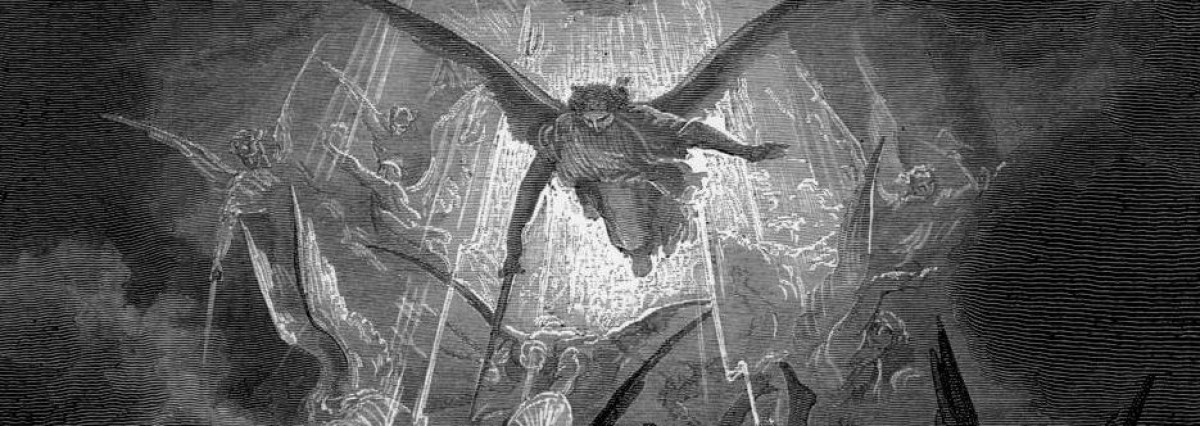
Alby Stone: Red, Red, Red

Copyright © 2021 Alby Stone

‘And how did that make you feel?’

Six years and eleven months and one week of therapies and therapists, counsellors and shrinks, and it still got to him. The quiet, calm voices and soothing, reasonable tones of ruthless inquisition, always culminating in that. Arthur must have explained his feelings a thousand times to a hundred so-called professionals in many different settings, and every single one of them thought delving into his damned feelings would lead them to a truth as yet unearthed. What was the point? He was where he was, out of circulation, condemned to a seemingly eternal regime of combined treatment and punishment. They already had a truth, their pound of flesh. But like grizzling, fractious children they always wanted more, an elusive and ephemeral thing they had never been able to articulate except in that one multipurpose and thus meaningless word: feelings. Why keep on picking at the same old scab? Was it his fault that truth wasn’t good enough for them?

But he always played the game. ‘It made me feel…’ He paused. Which feeling would it be today? Arthur stared at the latest expert. It was her first time with him. She looked much too young to be doing this. Not more than a year out of her doctorate, if he was any judge, and in need of a few good meals. The neat ponytail and ugly but trendy thick-rimmed spectacles, the neutral blue cardigan and crisp white blouse, the knife-edge crease on those black trousers, the shiny wedges, discreet studs in her earlobes and slim silver watch circling a frankly skinny wrist – they spoke of someone trying just a little too hard. She was new here – new anywhere. Her first solo gig.

He’d had them all, from ancient, tobacco-stained Freudians and faux-cheerful Jungians to pink-cheeked CBT engineers and mindfulness airheads, from jaded old hands to keen fresh faces. This one – Arthur had already forgotten her name – was the youngest yet, and he was willing to bet good money that the calm exterior masked a racing pulse and at least a hint of untoward perspiration. He glanced casually at her right hand. Sure enough, that pencil was ever so slightly a-tremble. When he gazed at her directly she coloured but stubbornly refused to break eye contact. He wondered what she’d made of his file, what she knew about him and what he’d done. Enough to make her nervous, obviously; enough that she had to mask horror with a poker face. Enough that she needed to be brave.

Arthur was not an unkind man. In that place he was known for being quiet and calm, polite and considerate, even helpful. He’d raised neither his voice nor his hand to anyone. He’d cooperated. Most important of all, he’d stuck to his story, never once deviating – except in the apparently key matter of his feelings – from the script constructed so long ago. It was, after all, the unvarnished truth. Despite his patient nature, he was sick to death of repeating himself ad nauseam to every over-certificated time-server and bright-eyed eager beaver who came his way. But that was the plan. In any case, all they ever wanted was for him to keep singing the same old song. If nothing else, it reinforced their preconceptions and that made them happy, which made for a quiet life. All he really had to do was devise slightly different ways of telling his story, adding whatever nuance fitted the inquisitor or the setting. When he didn’t answer that question, or responded with a fudge, they quickly moved on. It was a formality, only another box to be ticked. They cared, but not enough to push it.

This one was different, though. Something about her told him that although courageous in her own way she was as messed up as he was supposed to be. That buttoned-down thinness did not signify emotional or psychological good health. Maybe it was time Arthur took a new approach.

‘You know why I’m in here,’ he said. It was a statement, not a question.

She looked up from her notes, turned away to stare at the window. ‘Yes, of course.’

‘Are you afraid of me?’

A barely-perceptible shake of the ponytail. ‘No,’ she lied. ‘You’ve been very well-behaved since – since the, ah, incident. Since the moment you were, er, apprehended, in fact. Other than a refusal to participate in group sessions and an occasional tendency toward solitude, you’ve been a model, um, resident.’

Resident. That was one way of putting it. ‘I’m just curious,’ he said. ‘What actual use is all this? One scheduled session a week for six years and almost exactly eleven months, plus umpteen ad hoc interviews with visiting specialists. Not to mention a few less than satisfactory attempts at group therapy. And the same question is asked every single time. How did it make me feel? Yet so far not one of your colleagues here or fellow professionals from elsewhere has explained why I’m supposed to answer it. Would you be prepared to do me that courtesy?’ Arthur looked across the room at the nameplate on her desk. ‘Doctor Linden?’

Furnishings and design in that place had changed over the years. The current vogue was for a contrast between formal setting – the grey desk, carpet and filing cabinets, beige computer and cream swivel chairs – and the informal, the cosy corner with two light blue easy chairs and a pine coffee table, a couple of bland reproduction landscapes, almost certainly IKEA special offers. All cool blues, neutral greys, pallid browns. No red, never red, the colour of aggression. No personal touches that might ignite untoward behaviour. No changes from one redecoration to the next. Nothing contentious, like references to politics or religion. Nothing volatile.

The chairs did not quite oppose. It was non-confrontational and conspiratorial, almost intimate. They were a team, Arthur and her. Allies, comrades in arms. Them against the world. It was a lie, underlined by the lukewarm, scald-proof coffee, the wobbly plastic cups and stubby spoons, the absence of sharp corners. And the beefy orderly stationed just outside the door, only the press of an alarm button away.

Doctor Linden rose from her chair and stood by the window. Arthur leaned back to adjust his view. Now she was a silhouette, not quite black against the season’s greyish light but dark enough to pass for a shadow. Two-dimensional and empty. Not human. Arthur tilted his head to the right. Yes, that was better. He preferred her mousy blonde, those smooth cheeks pink with discomfort. It was satisfying to see the borders of her comfort zone shift a little. ‘The idea,’ she said, ‘is that by openly and honestly discussing what happened and acknowledging the truth you will be able to accept them and move on.’

‘But I’ve already done that. I’ve done it right from the start, since my very first session. I mean, even before that I did so to the police and in court, when I was remanded for evaluation, sectioned. I’ve said it, repeated it and paraphrased it more times than I can count. I’ve been honest and candid about everything. The truth has been told, Doctor Linden. What more do you want?’

Of course, Arthur knew what she wanted – to hear for herself, straight from the horse’s mouth, what her predecessors had secretly yearned for but signally failed to learn: how he’d felt. Arthur sighed and leaned back in the comfortable chair. This was not going to be easy.

His first instinct was to deflect. ‘I felt ill when I realised what I’d done, Doctor Linden. Physically sick, nauseated by my actions, by the damage and pain I’d caused. I wished I could turn the clock back an hour and walk away from the scene. That I had never been there and it hadn’t happened.’

She frowned but quickly recovered to smile. ‘I don’t mean how you felt physically, Arthur. I mean emotionally. How did you feel at the time? How did you feel when you’d… when you were…?’ She swallowed, unable to finish the sentence. Oh yes, she was frightened of him alright. That was unfortunate. He didn’t want to make anyone unhappy.

‘I have no memory of how I felt during the actual incident, or in whatever events led up to it. It’s a complete blank. I remember how I felt in the immediate aftermath. When clarity returned. The shock. Being appalled by my own behaviour, the harm I’d caused.’ Arthur leaned back and extended his legs, demonstrating relaxation while watching her face closely. Her eyes narrowed a fraction. She knew he was lying.

The only thing that convincingly explains an inexplicable act is an absence of explanation. It allows a listener to draw their own conclusions, reinforce their own preconceptions. It is an admission of guilt, of shame even where no shame is evident and the subject has no guilt whatsoever. The labels follow automatically. Monster. Pervert. Sociopath. Nutter. Scum. Delete as applicable. In this case the a priori assumption was that it must be one or another of those, because Arthur had done something no normal person would do. The evidence was there – wounds, blood, horror, witnesses – and that was all they needed, that and his refusal to deny or explain. After all, insanity had no true logic. Yet, paradoxically, an explanation was exactly what they thought they wanted, and that lay, so they all believed, in Arthur’s feelings.

He thought back to that dreadful evening, the awful splash of red, the screams as terrified children rushed to the safety of their mothers’ arms, the destruction, the revulsion on each of the countless faces that surrounded him in the immediate aftermath. Later, in the police station, one of the cops had given him tea, with no attempt to stir in the gob of thick saliva floating on the surface. And that, he knew, was how his life was going to be from that moment on. Arthur would be forever despised.

Something in him broke and he was flooded with sadness. ‘They didn’t charge me, just processed me and called in a doctor. Then they put me in the ambulance, glad to be shot of someone like me. I knew I’d gone too far. I accepted what came next. I felt…’

Linden turned quickly, staring at him excitedly, and sat down. This was her defining moment. The tough nut had cracked. Victory was within her grasp. ‘Describe how you felt when it happened.’

Arthur swallowed. ‘I’d been at work. Normally I took time off but that year I couldn’t swing it. And it was even worse than I remembered. Everybody was so happy – everyone but me. And I’ve got this thing, this condition – seasonally affected disorder? It makes me so unhappy at that time of year. It builds up and up and up, until…’

‘Every year?’

‘Yes, since I was a kid, for as long as I can remember. But usually I could just hide myself away, pretend it wasn’t happening until it passed. It’s easier here. I can just stay in my room for a couple of weeks. I have my own little bathroom and a kettle for tea and coffee, and I keep a bit of food there. Nothing immediately perishable, of course. Biscuits and cheese and chocolate and dried fruit and whatever. And I don’t get bored – I’ve got books and music and a telly, not that there’s ever anything worth watching at the best of times. I like old films and sitcoms, as long as it doesn’t mention…. Well, I can escape. But that day I couldn’t.’

‘And what made it so much worse that day?’

Arthur closed his eyes. ‘As I said, I’d been at work. That was unbearable, so I left early to get some groceries in. That was the last working day and I needed a few things to tide me over. But it was awful outside. The whole world seemed to have gone bloody mad with it. So anyway, I could feel it all building up. When I got to the Morrisons round the corner from where I lived, it was absolutely mental, and by then so was I. This old fat bloke was shouting his mouth off and the kids were running around all over the place, and the music – Christ, the music. So loud, relentless…’ He shook his head.

‘And how did all that make you feel, Arthur?’

‘Upset and angry. Really angry. That was when I clocked what that mouthy old bloke was wearing and… Well, I just saw red.’

‘You saw red?’

‘Yeah, then I – I couldn’t help myself. It was too much. Like the whole world wanted to punish me just for being myself, you? I couldn’t take it any more. I snapped.’

Arthur realised his hands were shaking badly. This was a turning point, the day he would finally admit the unthinkable, the thing that would make him a pariah, condemn him to live the remainder of his life as an outcast, a man guilty of the worst crime imaginable. He’d been despised and was now accustomed to it – but from now on he would be hated. His guts churned violently and he wondered if he could make his confession without throwing up on that neutral grey carpet.

Linden stared thoughtfully at Arthur’s case notes. ‘I remember the next day’s headlines, of course. And the trial, where you pleaded guilty and spared others from the dreadful ordeal of reliving the incident. But I still don’t get it. You beat the poor man to within an inch of his life. You smashed everything around him. Then you sat down and screamed until the police came.’

Arthur shrugged wearily. ‘I told you, I saw red.’

‘That was no reason to do what you did. People see red all the time for one reason or another, but they don’t do that.’

The scene was imprinted on Arthur’s mind. Red, red, red. ‘The old man on the supermarket floor, the frightened, weeping children, the horrified mothers, the shocked checkout staff. A picture that would never leave him.

 ‘You don’t understand,’ he said. ‘I really did see red. It was that stupid outfit he was wearing, that and the ridiculous beard and hair. You see, it isn’t the colour alone that sets me off. In any other situation it’s a nice colour. But put it together with the music and the time of year and everything else, and it drives me completely crazy. The kind of crazy that makes me liable to…’ Arthur put his head in his hands, hiding the tears that flowed for the first time in six years and eleven months and one week. ‘To do what I did.’ He sobbed. ‘You see? This is why I don’t like talking about those feelings.’

Linden’s eyes glittered like baubles in candlelight. ‘Arthur, this is a major breakthrough. But I need – you need – to understand why that particular combination of colour, sound and ambience causes you so much distress, and why that distress was expressed so violently.’

He groaned. ‘I’ve always been so ashamed of hating it. I was the only one, you see, the only person I knew who felt that way. Right from when I was a little kid it was obvious that to fit in I had to play the game, that there must be something wrong with anyone who didn’t. And when you’re a kid you don’t want to be the odd one out, you know? So I joined in, went along with it, even when I was screaming inside. And it got worse as time went on. My seasonally affected disorder. As soon as I was old enough to get a job and earn money, I got a place of my own, somewhere I could hunker down and ride it out for a couple of weeks when necessary. But it starts earlier every year, doesn’t it? I mean, the build-up began in October that year. It won’t be long before it starts in the bloody summer. And the earlier it starts, the more everyone goes on about it. On and on and fucking on, with no let-up. Okay, I can bear it in small doses for a little while and I can tune it out, up to a point. Besides, I’m usually well away from it all by the time it really kicks off in earnest. But that year I couldn’t get the time off and the office where I worked was a fucking madhouse. Of course, I got all the jibes about being a party-pooper, a killjoy, misery-guts, all that stuff. On that last day one woman even said there was something wrong with me, and you can imagine how that made me feel.’

‘You started seeing red?’

Arthur nodded. ‘Red, red, red. Then, at the supermarket…’

Outraged, Linden stared at him, struggling to hide the loathing she felt for this nasty, disgusting man who, she had decided, was beyond all possibility of redemption. Why? Even the Muslims, Hindus and Jews she knew joined in the fun. It was a wonderful time. She couldn’t understand how anyone could dislike it, certainly no one normal. ‘You beat the shit out of a man who was doing something good and kind, and destroyed everything around him. A man in hospital for weeks and all those little kids traumatised because you saw red. You sad, miserable bastard. I hope you rot in here for the rest of your shitty little life.’ She stood, face contorted, eyes bright with venom. ‘Merry fucking Christmas, Arthur.’