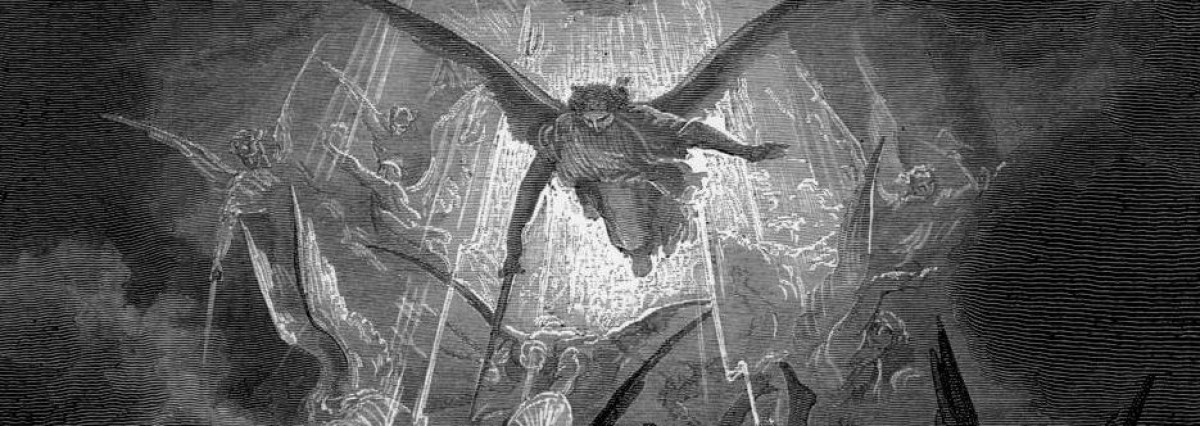
Copyright © 2024 Alby Stone
She hasn’t spoken at all today. Again. How many days is that now? Seven? Eight? Since she took to her bed, and that was on…
I honestly can’t remember. Thinking about it, it must have been nearly three weeks ago. But I wouldn’t swear to it.
I wipe her face with a damp cloth, washing away seat and what I think may be tears. She shifts but doesn’t actually move. Her eyes are bright with fever, wide and afraid and desperate. Rain lashes against the window as if to mock my efforts. Every now and then a gust of wind rattles the pane. The room is freezing but her cheeks and forehead are so, so hot. I wish I knew what is wrong with her.
I know what is wrong with her.
The voice comes again, a stage whisper invading my inner ear, insinuating itself into my thoughts. It is her voice, though her lips and tongue are still.
You did this.
I did not, but there is no arguing with her.
I love the bleak, timeless beauty of the Welsh landscape. This place is gorgeous in the daytime and seductive but eerie in twilight. The brochure, of course, showed only the sunlit views. The romantic mountain backdrop, woodland and waterfalls, the lake and its secluded beach. A dolmen on a nearby hill, pictured dark grey against the silver-blue waters beyond, a relic from the time the early Welsh were experimenting with pottery but still using flint tools. Then the house, a Victorian misanthrope’s retreat from the world, a sturdy but strangely elegant stone structure somewhere between a town house and a cottage, though I plumped for the latter. The interior charming, the furnishings and decor hardly changed in a hundred years or more. There were quite a few books on the shelves, mostly about Wales and the Welsh people through history, as I would have expected for a holiday rental in the middle of a Welsh nowhere. It’s a lovely spot for an extended retreat, but perhaps a little too isolated. And, in the hours between dusk and dawn, it has become terrible. We should never have come here.
You did this.
No, I did not. She saw the brochure and thought this would be the ideal place to write her novel. That was why we rented it for six months, why I agreed to work from here instead of at home in London. That was why I stayed here even when we discovered the broadband didn’t work, there was no mobile phone signal, the landline service was intermittent, and the electricity failed for random periods at random intervals. It only took a week for me to hate the place, though she loved it. She was the one who was tempted and I went along with it because it was what she wanted, and because I love Wales.
We came here early in June. It’s now October. I’ve lost work because of the dreadful state of local telecommunications, with a thirty-minute drive to find a phone signal, my fingers crossed that the nearest settlement – only a small village, naturally; this place is remote – had an internet cafe or maybe a library with computer access. In London it would have been a matter of just walking a couple of hundred metres, but in this near-wilderness I found neither. I did manage to connect when I drove further east, across the border to Hereford, but by then it was too late to placate angry clients or rescue any deals, though I did at least find a supermarket where I could stock up on tinned and dried goods to replace the food spoiled in that useless freezer.
Five months. And in all that time she hasn’t written more than one word. Just one single, solitary word. The first word of the title of her doomed novel.
The
Other than that, she’s done nothing but daydream and go for long walks. Or, to be exact, one long walk repeated many times. Down to the lake, through the woods, up to the dolmen, and from there back to the cottage. She wouldn’t let me go with her, but I followed her a few times, at first out of curiosity, then with mounting dread. The same pattern every time: half an hour sitting on a rock, gazing out across the lake; an hour wandering aimlessly among the trees; another thirty minutes standing with one hand on the dolmen. I timed her. Whatever the weather, her routine never varied by more than a minute and, the woods aside, her path did not deviate by more than a metre or two. Either she never noticed my presence, or didn’t want to let on that she had.
She has always been a quiet woman, prone to bouts of introspection. I kept telling myself that she was just looking for inspiration, even when she began to restrict our conversations, normally prolonged and humorous, to just a few words at a time. She seemed distant, distracted, dreamy – but I convinced myself that it was just the way she was when she was in the throes of creation. After her walks she would return to the big cottage, power on her laptop, and stare at the screen for hours, hands poised over the keyboard but never descending to touch a key. Composing in her head, I thought, constructing, reorganising and rejecting text before it ever reached the hard drive. I didn’t ask how it was going because I didn’t want to risk disrupting her creative flow. Because I believed in her.
One evening she came back from her walk and sat in the lounge at the table she’d been using for a desk, as she usually did, but this time she didn’t touch the laptop. When I looked up from my book to ask if she was ready to eat, I saw she was pale and shivering. I stood and asked if she was okay. She shrugged and shook her head. All she said was: ‘The…’ Then she rose and went to bed.
That was the last time she spoke. I’ve been trying to look after her since then. At first she communicated with gestures. The most telling was the vehement head-shake when I suggested calling a doctor – assuming the landline was functional, a fifty-fifty chance at best – and a mime of thirst. I brought her water, tea and a plate of biscuits. She consumed the drinks, ate one biscuit, then fell asleep. She seemed to be resting easy enough, so I concluded she had a dose of the flu, perhaps something I’d brought in but was immune to myself.
I fell into a routine, sitting with her day and night, bringing her tea and water. She ate a biscuit or two every day, and a bowl of tinned vegetable soup every other day. She got out of bed only to go to the toilet. Her fever worsened. I washed her and made sure she turned over regularly so she wouldn’t get pressure sores.
It was about then that I noticed the view from the windows was subtly altered. At twilight the shadows seemed deeper, birdsong ceased, and I thought I saw shapes moving among the trees. That first time, I went out just as night fell to see if anyone was lurking out there, and was immediately overcome with a kind of panic. I rushed back indoors, hyperventilating. When I calmed down – assisted by a pot of tea and a couple of the cigarettes I was trying to give up – I went upstairs and found her standing at the window, staring out. She pointed, her hand trembling, but all I could see was an inky darkness. That was the first time I heard her voice whisper loudly in my head.
You did this.
It sounded to clear and real to be mere imagination. Telepathy? I don’t – didn’t – believe in that sort of thing. Psychic phenomena were for cranks and the gullible. I’ve heard voices before, in that threshold state between waking and sleeping, but so do many other people. It means nothing, only the onset of dreaming. This was different. I had no explanation.
That night, it began to rain heavily, a downpour that has been unrelenting. In the morning I resolved to drive to Hereford and seek medical advice. I doubted the GP surgeries or hospital would entertain such a request, but there was surely a pharmacist who would be able to help. As it turned out, the problem solved itself. I hadn’t gone more than a hundred metres when I found the narrow gravel track that was the only way to or from the cottage had gone, the part closest to me washed away, the rest obscured by a landslide, impassable. It was no surprise that I hadn’t heard it happening, not with the torrential rain drumming on the roof and hammering at the windows.
We were, I realised, completely cut off from the outside world. No road in or out, no internet or telephones. It was too far to the nearest villages to walk, certainly not in those appalling conditions. Food wasn’t a worry, thanks to my otherwise fruitless trip to Hereford and our reduced appetites. But if she got sicker, or if anything happened to me, we’d be in real trouble. But there was nothing to be done about it. All we could do – all I could do, as she wasn’t in any fit state to do anything – was wait.
You did this.
The voice in my head has settled into a loop. That phrase will be repeated every ten or fifteen minutes until exhaustion takes me from it for a few hours. In the morning there will be silence, except for the wind and rain and kitchen sounds as I make drinks and eat breakfast cereal without milk or sugar. I look out of the window and see only blackness. It will be dawn in a few hours and I will be able to see how much further the lake has risen. The last time I looked the little shingle beach had been swallowed up and the rock she used to sit on was submerged. Hopefully, the water won’t reach the cottage. I go down to the kitchen and light another guilty cigarette. Down here, the rain seems worse than ever. I sigh and inhale and exhale and wonder what is wrong with her.
I know what is wrong with her. I light another cigarette and wish I’d had the foresight to get some booze in instead of boxes of tinned meat and fish, beans and macaroni cheese and ravioli, and soup, soup, soup. This is just the situation for tequila.
A couple of days ago, when I noticed the lake had begun to rise, I wrapped myself up in North Face waterproofs, dragged on a pair of wellington boots, and went down to the lakeside, where I sat on the rock and stared blankly at the water for half an hour. Then I walked to the woods and nosed around among the trees and bushes for an hour or so. On my previous visits I’d been too busy watching her to notice that the woods had grown around and through ancient stonework, worn and tumbled limestone blocks spotted with moss and lichen. What once stood there? A castle, a monastery perhaps? Whatever it was, only scattered ruins remained. I saw nothing else that had been crafted by human hands. Nothing moved there, no birds called or sang. Waterlogged and chill as it was, the woods seemed diseased, the rotten flesh of some millennia-old giant, with decaying masonry for its bones. It was a sick place. I wondered if it was the source of her malady.
That notion was dispelled when I went to the dolmen. I knew what a dolmen was, thanks to ten minutes on the internet after reading the brochure. A single-chambered tomb, probably between five and six thousand years old. This one comprised two upright slabs with another laid flat on top. Not limestone, something else. Granite? I had no idea. Originally, the dolmen might have been buried within a tumulus, a mound of earth that had long ago been washed or wafted away by rain and wind. I wondered who had been laid to rest there all those thousands of years ago, in the days when new technology had been not the latest iPhone but a differently-knapped flint dagger. Just as she had done, I placed my hand on the right-hand upright.
The
The voice was shockingly loud and clear yet also impossibly distant, echoing like a stage whisper in a cavern. And in that instant I knew that the person who had been interred there had died of an awful wasting disease, a debilitating fever that only ceased with death. It came again.
The
Panic consumed me, driving all rational thought from my mind. I tore my hand away and ran back to the cottage, slipping and sliding dangerously on the muddy hillside, and locked and bolted the door behind me, heart racing and hands shaking. It was, I told myself forcefully, just my imagination, the product of nerves frayed to breaking point by worry and our perilous situation. I hadn’t really heard a spectral voice speaking across millennia. Besides, the was a crazy thing for even an imaginary Neolithic spectre to say. Surely a real ghost from the dawn of Wales would speak some ancestral form of the Welsh language? No, this was a hallucination of my own making. My mind was playing tricks and populating the silence with the last thing she’d said to me. The only word she’d written in five months.
I look at my watch. Nearly nine o’clock and it’s as dark as it was at midnight. What happened to the dawn? The sun should have risen by now. I’ve experienced bad weather before, whatever the season – I remember a mid-June afternoon a few years ago when I had to switch on the light to read a newspaper – but unless there’s been an unpredicted total solar eclipse, that sky must be apocalyptically overcast, promising improbably bad weather ahead. I can’t believe the rain could possibly get heavier.
She won’t be awake yet. The sickness exhausts her, and she sleeps late into the morning while nodding off at any time. I’ve eaten, after a fashion, and she won’t be ready for anything for a good couple of hours. I have nothing to do and I’m bored. It’s time I had a good look at those books on the shelves. Thankfully, the electricity has stayed on, so I’ll be able to read. I make tea and go into the lounge, where the books are. Maybe there will be some local history, something to tell me more about the ruins in the woods. I don’t really want to know about the dolmen.
Half of the books, frustratingly, are in Welsh. It’s reasonable, I suppose. Even Welsh people like to take their holidays in Wales, and this spot is, superficially at least, rather beautiful. In daylight. There are a few tourist guides in English, translations of medieval texts by Gerald of Wales and Nennius, the inevitable Mabinogion. Dylan Thomas, of course, poets I’ve never heard of, a handful of earnest-looking novels that don’t appeal to me, Dorothy Edwards, Richard Llewellyn and Arthur Machen. A battered copy of Teach Yourself Welsh, and a Welsh-English dictionary.
On past visits to Wales I’d been annoyed when people conversing in pubs and shops switched from English to Welsh as soon as they heard my accent. Okay, it’s their language and they have every right to speak it, and it was only a few people among a generally friendly and welcoming population – but whatever they were talking about, that seamless mid-sentence change to Welsh was quite clearly designed to exclude me for no other reason than that I was a foreigner. I wouldn’t have had a problem with private conversations, but it happened twice in shops while people were discussing the weather, for heaven’s sake, and once it was a couple of blokes in a pub talking about rugby. It was, in my view, just plain rude. On the other hand, it was perhaps rude of me to go to another country without bothering to learn at least the basics of conversation in their language. I wouldn’t do it anywhere else. A few words of Welsh would be polite. Besides, it might take my mind off this mess. I reach for the book with the blue and yellow dust jacket.
An hour later, I return Teach Yourself Welsh to the shelf, defeated by phonetics. The Welsh I’ve heard spoken sounds expressive and beautiful, but I just can’t get my head around a language in which y is pronounced like u, u is spoken like a short i, w is like double-o, and double-d becomes a soft th. Every time I try to utter a Welsh word, it just sounds wrong, harsh and clumsy and nothing like any Welsh I’ve ever heard.
Outside, the world is still black, the rain still falls, and it’s getting colder. I go to fill the kettle and see ice is forming in the kitchen sink. I hear a faint sound from upstairs. She is waking. I make a pot of tea, pour two mugs and take them up.
She is sitting bolt upright, her face a mask of terror, arms and legs straight and rigid. Her face is sweaty and gaunt, her hair tangled. She looks up when I enter the bedroom but does not seem to register my presence beyond hearing my muffled footsteps. She seems puzzled.
‘Tea?’ I say.
She gasps, surprised by my voice. ‘The…’
I put the mugs on the bedside table. Her eyes follow the sound of crockery on wood, but she makes no move to reach for the brew. With a jolt, I realise she can’t see it. She is blind.
‘You did this,’ she says, for once out loud and not in my mind, and now I know those words were never addressed to me.
She falls silent. I perch on the edge of the bed and wait until the tea has cooled a little, then raise the drink to her lips. She is thirsty and drinks greedily as I tilt the mug. Her face feels so hot and the sweat is pouring from her. Helplessly, I hold her cold hand until she falls asleep. I have no idea what to do.
I go back to the lounge with my now-lukewarm drink, and collapse into an armchair. I am trembling and sweating, and when I put my chilly hand to my forehead, I detect the onset of a fever. My vision is slightly blurred, and although the electricity is, miraculously, still on, the light bulb seems dimmer. I know what is happening to me, just as in my heart I’ve known for weeks what is wrong with her, ever since that first time I saw her touch the dolmen. A plague not so much from the past as of it. A plague we are not going to escape. Hope dribbles away and leaves me empty. I suddenly remember something I read just an hour or so ago, and on jelly legs I go to the bookshelves and take down the Welsh dictionary.
The Welsh word for ‘black’ is du. I think about pronunciation for a second or two, then say it aloud.